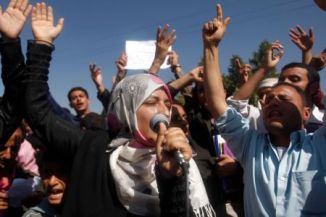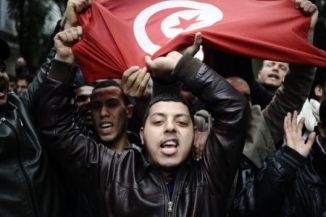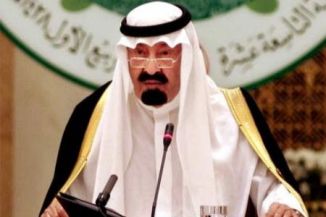
After Tunisia, Now Yemeni students urge president's exit


JNN 24 Jan 2011 : Drawing inspiration from revolution in Tunisia, hundreds of Yemeni students have staged rival protests against the country’s President Ali Abdullah Saleh. Continue reading
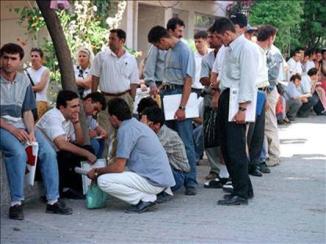
IMF warns about Arab world joblessness


JNN 24 Jan 2011 :The International Monetary Fund (IMF) has warned that high unemployment rate is an “increasingly urgent” challenge for the Arab world. “We do see economic pressure building in the region,” said David Hawley, an IMF spokesman. Continue reading

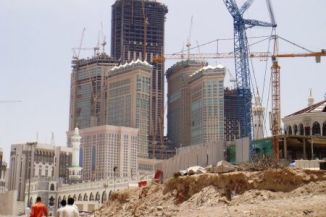
S Arabia Destroying Islamic heritage, By razing Islamic sites , to earn More Money


JNN 24 Jan 2011 : Saudi Arabia has been accused of an unprecedented onslaught on historic structures in the heart of Mecca and Medina — the cradle of Islam, revered by the world’s 1.5 billion Muslims. Continue reading

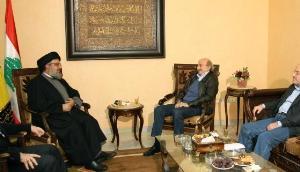
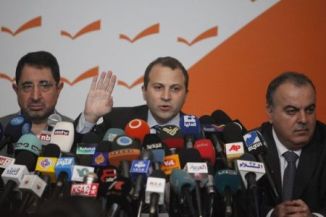
Druze leader Jumblatt backs Hezbollah in Lebanon


JNN 22 Jan 2011 BEIRUT : The Lebanese Druze leader, Walid Jumblatt, handed Hizbollah a major political victory yesterday, throwing his support behind the bid by the Shiite-dominated militant party to form a new government. Continue reading

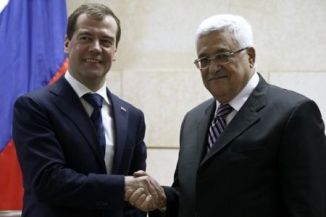
Russia backs independent Palestine


JNN 19 Jan 2011 : Russian President Dmitry Medvedev has reaffirmed Moscow’s support of an independent Palestinian state as recognized by the former Soviet Union in 1988. Continue reading

Iran warns West of meddling in Tunisia & Lebanon


JNN 19 Jan 2011 : Iran’s President Mahmoud Ahmadinejad has warned the United States, Israel and some Western states not to interfere in Tunisia and Lebanon’s internal affairs. Continue reading

Sunni and Shia prayer leaders In African region Highlights unity


JNN 18 Jan 2011 : Shia prayer leader in Islam prophet Mosque, Seyed Ahmad Zeitoun pointed to the issue of Sudan division and said when the U.S and its allies saw that their malignant aims faced with fiasco in the Middle East, they endeavored to reach their goals in different way. Continue reading

Egyptian regime fears mass protests, people call for Tunisian-style demos


Hundreds of Egyptians have gathered outside the Tunisian Embassy in Cairo to show their solidarity with Tunisians and have called for protests similar to those in Tunisia. Continue reading

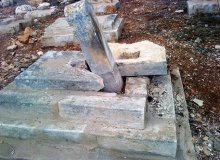
Muslim graves destroyed in Jerusalem


JNN 14 Jan 2011 : The foundation said one of its officials, Fawwaz Hasan, visited the cemetery and found some graves completely destroyed while the tombstones had been removed from others. Continue reading

Lebanese unity Govt collapses , After Hezbollah Ministers Resignations


JNN 12 Jan 2011 Beirut : Lebanon’s unity government has collapsed after 11 ministers led by Hezbollah and its allies resigned over tensions stemming from a US-backed probe into the assassination of former premier Rafiq Hariri Continue reading

Lebanese unity Govt collapses , After Hezbollah Ministers Resignations


JNN 12 Jan 2011 Beirut : Lebanon’s unity government has collapsed after 11 ministers led by Hezbollah and its allies resigned over tensions stemming from a US-backed probe into the assassination of former premier Rafiq Hariri Continue reading

'Israel poisoned Arafat with thallium'


JNN 11 Jan 2011 : A new investigation into the death of late Palestinian leader Yasser Arafat has revealed that he had been poisoned by a lethal dose of thallium in his food or drinking water. Continue reading

‘Israel poisoned Arafat with thallium’


JNN 11 Jan 2011 : A new investigation into the death of late Palestinian leader Yasser Arafat has revealed that he had been poisoned by a lethal dose of thallium in his food or drinking water. Continue reading

US soldier to face court-martial in Afghan Civilians killing


JNN 08 Jan 2011 SEATTLE: A US Army staff sergeant was ordered on Friday to be tried by a military court to face charges that include murdering three unarmed Afghan civilians, keeping body parts as grisly war trophies and beating a whistle-blower who told superiors about widespread hashish use in his unit.

Staff Sergeant Calvin Gibbs, 25, is one of five soldiers from the Stryker Brigade charged with murder. Twelve soldiers in all face charges in the most serious prosecutions of alleged war atrocities by US military deployed in Afghanistan since the war began in 2001.

JNN has learned the Army is also re-examining a 2004 shooting that involved Gibbs in Iraq in which three members of a family were killed.

After his May 11 arrest in Afghanistan, Gibbs showed investigators a tattoo on his lower left leg depicting crossed pistols and six skulls. He told investigators the skulls were a way to keep track of his kills in both Iraq and Afghanistan, according to investigative interview notes shown to JNN.

And a soldier under his command told investigators Gibbs “associates with skinheads online,” the investigative notes show. The soldier, who is not charged, told investigators the skinheads “are worse than most gang members I have ever met.”

Gibbs, of Billings, Montana, was ordered to stand trial by Major General Curtis Scaparrotti, commanding officer of Joint Base Lewis-McChord. No date was set.

The Stryker Brigade cases, with some 4,000 photographs sealed from public view including some reportedly of soldiers posing with Afghan casualties, have drawn comparisons to the inflammatory Abu Ghraib prison scandal in Iraq in 2004.

According to investigative documents made available to JNN, Gibbs collected human fingers from his victims. Also, the Army has accused members of Gibbs’ platoon of possessing photographs of victims.

And JNN has learned the Army is now re-examining Gibbs’ record in Iraq, where he was involved in the killing of an Iraqi family in the summer of 2004.

Gibbs faces a maximum penalty of life imprisonment without parole for charges that include premeditated murder in the deaths of three unarmed Afghan civilians, including a cleric, in the Afghan villages of La Muhammad Kalay in January 2010, Khari Kleyl in February 2010 and Qualaday in May 2010, according to court documents.

Gibbs allegedly kept fingers, severed with medical shears, and displayed them at platoon mates to intimidate them.

He faces a dozen other charges that include keeping body parts such as teeth, finger and leg bones as war trophies.

The cases began as an investigation into hashish use by members of what was then known as the 5th Stryker Brigade, but grew into a probe of what prosecutors described as an infantry unit run amok.

Phillip Stackhouse, a civilian attorney defending Gibbs, has described Gibbs’ involvement as legitimate combat killings, He was not immediately available for comment on the order.

2 Bahraini Shia Children Aged 10, Sentenced to Imprisonment


JNN 07 Jan 2011 : Bahrain’s Court convicted 3  Bahraini’s on the grounds of taking part in anti-regime activities. Bahraini court imposed a jail sentence on two children for their pro-democracy activities. The two children each aged 10 years old are said to be the youngest political prisoners in the world . While The whole trial took less than one hour to issue the verdict and sentence.
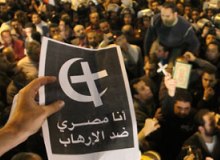
In one of the most outrageous miscarriages of justice in the world, a Bahraini court imposed a jail sentence on two children for their pro-democracy activities. The two children each aged 10 years old are said to be the youngest political prisoners in the world and their continued detention has led to an outcry among local and international human rights activists.

The court also imposed a sentence of ten years imprisonment on three Bahrainis: Fadhel Abbas, his brother, Mohammad and Sayyed Ali Omran. They were also fined 4000 Bahraini Dinars (11,000 US dollars). Three other detainees in the same case, Jaffar Abdul Hamid, Fadhel Hubail and Abbas Ramadhan, had to wait for their sentence until 16th January. They were sentenced on the basis of confessions extracted under torture for allegedly taking part in anti-regime activities. The whole trial took less than one hour to issue the verdict and sentence. It is clear that the sentences came from high authorities who control the judiciary from the royal court. Despite pleas to allow the two brothers to see their seriously ill mother, Al Zayed refused the request.
The judge, Ibrahim Al Zayed, is the main official who presides over the courts sentencing the pro-democracy activists and has, himself, approved the practice of torture and refused to investigate any allegation of ill-treatment. With his two aides, Ali Al Dhahrani and Haitham Al Musaifer, they have become the judicial mouthpiece of the ruling family and have relied on their verdicts on “confessions” extracted under torture. Lord Avebury hinted that they may be implicated in those crimes for acting on those confessions.

Meanwhile more Bahrainis have been arrested and dumped in the underground cellars of the notorious National Security Agency (NSA) run by Khalifa bin Abdulla Al Khalifa, the former Ambassador to UK. Imad Ali Al Uraibi, 27, from the town of Musalla was arrested on Thursday 30th December.

The regime’s militias, riot police and Death Squads are continuing their iron-fist tactics with round-the-clock presence in hotspots. In Nuwaidrat, Sitra, Zinj and Al Adliya the activist youth were pursued relentlessly in the past few days ad they continued to write on walls and burn tyres in the streets. On 30th December they raided homes in Daih and Sanabis also. Mouse-and-cats games are continuing in several areas at the public anger mounts at what the Bahrainis perceive as an all-out attacks by the ruling junta on the native Bahrainis. The industrial areas in Sitra were the scene of frantic activities by the pro-regime’s militias especially near the roundabout separating the villages of Wadyan and Mhazza and inside Ql Giryah and Al Kharijiyah in Sitra where checkpoints were established. A family from the town of Daih has lodged an official complaint against those militias as they have wreaked havoc in the area. The family said that these militias would come in the early hours of the morning, ring the bell and stay outside their door, intimidate their children and create an atmosphere of fear for no real reason. The family’s complaint is unlikely to be heeded.

On another level, the political prisoners in the web allegedly involved in sedition and plots against the Al Khalifa, have continued to insist on re-instating their original team of lawyers who had demanded investigation of torture and called for re-investigation of the defendants under the jurisdiction of the court. They have now been subjected to more torture and abuse to force them to accept the new team of lawyers. In their recent family visits they have complained of beatings, deprivation of sleep, denial of religious books, the use of one syringe to extract blood from all of them and electric shocks. This outrageous behaviour is being witnessed by officials from Western embassies in Manama who have not moved one finger in protest.

Iraq's Top Brass Maliki, Allawi meet at Jafri’s house


JNN 07 Jan 2011 : Iraqi Prime Minister Nouri al-Maliki started a meeting with former premier Iyad Allawi, the leader of the al-Iraqiya bloc, at the house of Ibrahim al-Jaafari, the head of the National Alliance bloc, according to a source from Jaafari’s media office on Friday.

Iraqi Prime Minister Nouri al-Maliki started a meeting with former premier Iyad Allawi, the leader of the al-Iraqiya bloc, at the house of Ibrahim al-Jaafari, the head of the National Alliance bloc, according to a source from Jaafari’s media office on Friday.

“A Maliki-Allawi meeting started at Jaafari’s house to discuss the law on strategic policy council as well as the completion of the Iraqi government lineup,” the source told Aswat al-Iraq news agency.

He did not give further details.

Related Articles

Iraq’s Top Brass Maliki, Allawi meet at Jafri’s house


JNN 07 Jan 2011 : Iraqi Prime Minister Nouri al-Maliki started a meeting with former premier Iyad Allawi, the leader of the al-Iraqiya bloc, at the house of Ibrahim al-Jaafari, the head of the National Alliance bloc, according to a source from Jaafari’s media office on Friday.

Iraqi Prime Minister Nouri al-Maliki started a meeting with former premier Iyad Allawi, the leader of the al-Iraqiya bloc, at the house of Ibrahim al-Jaafari, the head of the National Alliance bloc, according to a source from Jaafari’s media office on Friday.

“A Maliki-Allawi meeting started at Jaafari’s house to discuss the law on strategic policy council as well as the completion of the Iraqi government lineup,” the source told Aswat al-Iraq news agency.

He did not give further details.

Related Articles

Muslims Protect Egypt Copts on Xmas


JNN 06 Jan 2011 : Muslims of all walks of life are planning to be on guard to defend churches across Egypt during Copts’ celebrations of Christmas on January 7, following a deadly bombing on New Year’s eve.

“I want all of us to gather as Muslim human shields to protect all Christian congregations at churches, schools and other places,” Mohamed Abdel-Moneim El-Sawy, the head of the El-Sawy Cultural Wheel, said in a statement obtained by OnIslam.net on Wednesday, January 5.

“I will join my colleagues in standing guard in front of churches in Zamalek,” he added, referring to an upmarket Cairo district, where the Cultural Wheel is located.

“We want to abort attempts of those who want to harm our Christian brothers and fuel sedition that would harm all Egyptians.”

The initiative follows a deadly bombing attack outside a church in the northern coastal city of Alexandria on New Year’s eve, which killed at least 23 people.

The attack came after a threat by an Al-Qaeda affiliate in Iraq, the Islamic State of Iraq, to attack Egypt’s Copts.

The bombing drew widespread condemnations, with Al-Azhar, the highest seat of learning in the Sunni Muslim world, denouncing it as running against the true spirits of Islam.

The initiative by El-Sawy Culture Wheel, one of the most important cultural venues in Egypt, followed similar calls from different Egyptian intellectuals and writers.

Last Saturday, Dr. Abdel Moneim Abou el-Fotouh, a member of the Muslim Brotherhood and secretary general of the Arab Doctors’ Union, called on Egyptians to gather in front of churches on January ۷, against any possible attacks.

Other Egyptian intellectuals also echoed similar calls.

“Every Egyptian Muslim has a duty to offer condolences to his fellow Christians for the killing of innocent Christians,” Egyptian writer Salah Issa said.

“January 7 should be a day of national mourning to protest Western plans to affect the unity of the Egyptian Muslims and Copts.”

According to the CIA World Fact Book, Muslims make up 90 percent of the country’s 80 million people, Copts 9 and other Christians 1 percent.

Massive Support

The Muslim initiative has won widespread support across Egypt.

“I will go to defend my brothers, neighbors and family among whom I was raised,” Ahmed Talaat Mekki wrote on Facebook.

“I’m a Muslim, and I will protect Churches with my blood on the Christmas day.”

“At school, army and club, we used to fast together and eat together.”

Shortly after last week’s attack, Muslim youth launched a Facebook group titled “On January 7, we will go to the churches to celebrate with our Christian brothers or die with them”.

The group has attracted more than 13.000 members.

Another group titled “Silence stand in black to mourn victims of terrorism” drew more than 6.000 participants.

Other activists on Twitter called for initiating websites grouping Muslims and Copts to promote national unity.

The church bombing has already sparked marches for cementing national unity between Muslims and Copts in the country.

Hundreds of Muslims and Christians took to the streets in Cairo’s district of Shobra on Saturday to denounce the church attack.

The Muslim initiative has won plaudits from many Coptic Egyptians.

“This is so much appreciated,” Simon Wafeek, a Christian, wrote on the Facebook group titled “Human shields of Egyptians to protect churches on Jesus birthday.”

“Your overwhelming feelings are much more valuable than all treasures of the world.

“We have always been brothers who cheer together and mourn together.”

These feelings, Wafeek says, were a big disappointment for those behind the church attack.

“Whatever happens, we will never be separated,” he said.

“If they targeted a mosque, we would also gather in solidarity with our Muslim brothers.”


Senior Sunni Cleric of Al Azhar University Severely Condemns Wahhabi's Holding Feasts on Ashura


JNN 03 Jan 2011 : Al-azhar university cleric severely blasts Wahhabis for holding feasts on Ashura, mourning day for the martyrdom anniversary of Imam Hussein (AS).
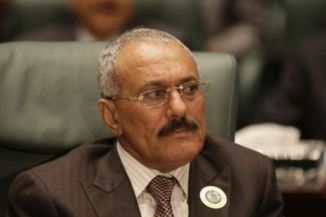
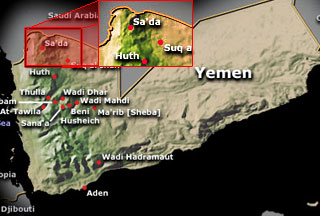
Senior Sunni cleric Sheykh Khalid Muhammad Kamal al-Shazli in a speech in the Egyptian capital of Cairo pointed to the martyrdom of Imam Hussein (AS), the third Shia Imam and grandson to the Prophet Muhammad (PBUH) and said that holding mourning ceremonies on the day of Ashura is one of the best ways of worshipping God.

A professor to Al-azhar university, Sheykh Khalid Muhammad Kamal al-Shazli said,” In the holy books of the Sunni, there are references to the catastrophes of Imam Hussein (AS) and holding feasts and parties on this day is absoulutely out of one’s ignorance and if Muslims do so, they have to change their way.

Wahhabi-related media every year in the mourning month of Muharram recite uncertain narrations which introduce Ashura as the day of feast and parties thinking that one has to hold a party on this day and double the blessings of the day by fasting.

Noteworthy to say that the Egyptian and people of Cairo in particular, including Shia and Sunni have a special attention to Imam Hussein (AS) mosque believing that the head of Imam Hussein (AS) [decapitated after his martyrdom] was carried by one of the daughters of Imam Hussein (AS) to Egypt as a way of protection from the enemies.

The place is now considered a holy place and much respected by both Shia and Sunni.

Senior Sunni Cleric of Al Azhar University Severely Condemns Wahhabi’s Holding Feasts on Ashura


JNN 03 Jan 2011 : Al-azhar university cleric severely blasts Wahhabis for holding feasts on Ashura, mourning day for the martyrdom anniversary of Imam Hussein (AS).
Senior Sunni cleric Sheykh Khalid Muhammad Kamal al-Shazli in a speech in the Egyptian capital of Cairo pointed to the martyrdom of Imam Hussein (AS), the third Shia Imam and grandson to the Prophet Muhammad (PBUH) and said that holding mourning ceremonies on the day of Ashura is one of the best ways of worshipping God.

A professor to Al-azhar university, Sheykh Khalid Muhammad Kamal al-Shazli said,” In the holy books of the Sunni, there are references to the catastrophes of Imam Hussein (AS) and holding feasts and parties on this day is absoulutely out of one’s ignorance and if Muslims do so, they have to change their way.

Wahhabi-related media every year in the mourning month of Muharram recite uncertain narrations which introduce Ashura as the day of feast and parties thinking that one has to hold a party on this day and double the blessings of the day by fasting.

Noteworthy to say that the Egyptian and people of Cairo in particular, including Shia and Sunni have a special attention to Imam Hussein (AS) mosque believing that the head of Imam Hussein (AS) [decapitated after his martyrdom] was carried by one of the daughters of Imam Hussein (AS) to Egypt as a way of protection from the enemies.

The place is now considered a holy place and much respected by both Shia and Sunni.

Yemen's Saleh aims for life presidency


JNN 02 Jan 2011 : Yemen’s parliament has preliminary agreed to a controversial constitutional amendment that would allow President Ali Abdullah Saleh to rule for life.

The measure was adopted with an overwhelming majority on Saturday, with only two parliament members opposing the vote.

The parliament — dominated by Saleh’s General People’s Congress (GPC) party — is expected to hold a formal vote on the issue in March.

The constitutional amendment will then be submitted for a referendum, which will be held simultaneously with parliamentary polls on April 27.

If the Yemeni parliament votes in favor of the measure, leading to the cancellation of presidential term limits, Saleh could become the life-long president of the Arabian Peninsula nation.

Saturday’s parliamentary ruling has sparked an opposition protest outside the parliament, where thousands of Yemenis, among them opposition and independent MPs, staged a sit-in.

They warned that adopting the amendments would “destroy what remains of the foundations of democracy” in Yemen.

They also emphasized that the action would “pave the way for hereditary succession.”

Opponents accuse the 68-year-old president of grooming his eldest son Ahmed, who heads an elite unit of the army called the Republican Guard, to succeed him.

Some analysts say Saturday’s voting could also heighten already simmering tensions in Yemen, where the government is facing a growing Al-Qaeda threat, a Shia Houthi uprising in the north and growing calls for secession in the south.

Yemen’s Saleh has been in power for more than 32 years.

He previously served as president of the Yemen Arab Republic (North Yemen) from 1978 until 1990. After the unification of the country, he resumed his post as president.

Saleh was elected for the first time in 1999 for a term of seven years. His second term, which began in 2006, expires in 2013.

Yemen’s Saleh aims for life presidency


JNN 02 Jan 2011 : Yemen’s parliament has preliminary agreed to a controversial constitutional amendment that would allow President Ali Abdullah Saleh to rule for life.

The measure was adopted with an overwhelming majority on Saturday, with only two parliament members opposing the vote.

The parliament — dominated by Saleh’s General People’s Congress (GPC) party — is expected to hold a formal vote on the issue in March.

The constitutional amendment will then be submitted for a referendum, which will be held simultaneously with parliamentary polls on April 27.

If the Yemeni parliament votes in favor of the measure, leading to the cancellation of presidential term limits, Saleh could become the life-long president of the Arabian Peninsula nation.

Saturday’s parliamentary ruling has sparked an opposition protest outside the parliament, where thousands of Yemenis, among them opposition and independent MPs, staged a sit-in.

They warned that adopting the amendments would “destroy what remains of the foundations of democracy” in Yemen.

They also emphasized that the action would “pave the way for hereditary succession.”

Opponents accuse the 68-year-old president of grooming his eldest son Ahmed, who heads an elite unit of the army called the Republican Guard, to succeed him.

Some analysts say Saturday’s voting could also heighten already simmering tensions in Yemen, where the government is facing a growing Al-Qaeda threat, a Shia Houthi uprising in the north and growing calls for secession in the south.

Yemen’s Saleh has been in power for more than 32 years.

He previously served as president of the Yemen Arab Republic (North Yemen) from 1978 until 1990. After the unification of the country, he resumed his post as president.

Saleh was elected for the first time in 1999 for a term of seven years. His second term, which began in 2006, expires in 2013.

Yemen Releases Hundreds of Huthi Shi'as


JNN 01 Jan 2011 : Yemen began to release hundreds of northern Huthi Shi’a prisoners on Thursday following Qatari mediation, the Shia and security officials said.

“The authorities on Thursday began releasing the (Zaidi) prisoners,” said a source close to the group, indicating that the decision would affect about 1,000 detainees.

A security official, who spoke on condition of anonymity, confirmed the release and added that “President Ali Abdullah Saleh ordered for 400 prisoners to be released in the first stage.”

Witnesses in Saada, the northern Shia stronghold, reported that about 150 prisoners had already arrived in the town.

The members from the Zaidi Shia group, also known as Huthis, have been engaged in sporadic fighting with government forces since 2004.

The prisoner release comes just days after a Qatari delegation arrived in Yemen in a bid to consolidate a fragile peace deal reached in February between the Sanaa government and the Huthis.

The truce has largely held, although a car bomb stuck a religious procession in a Shiite bastion in the northern province of Al-Jawf province on November 24, killing 15 people.

Yemen Releases Hundreds of Huthi Shi’as


JNN 01 Jan 2011 : Yemen began to release hundreds of northern Huthi Shi’a prisoners on Thursday following Qatari mediation, the Shia and security officials said.

“The authorities on Thursday began releasing the (Zaidi) prisoners,” said a source close to the group, indicating that the decision would affect about 1,000 detainees.

A security official, who spoke on condition of anonymity, confirmed the release and added that “President Ali Abdullah Saleh ordered for 400 prisoners to be released in the first stage.”

Witnesses in Saada, the northern Shia stronghold, reported that about 150 prisoners had already arrived in the town.

The members from the Zaidi Shia group, also known as Huthis, have been engaged in sporadic fighting with government forces since 2004.

The prisoner release comes just days after a Qatari delegation arrived in Yemen in a bid to consolidate a fragile peace deal reached in February between the Sanaa government and the Huthis.

The truce has largely held, although a car bomb stuck a religious procession in a Shiite bastion in the northern province of Al-Jawf province on November 24, killing 15 people.

Israel's Ex-President Convicted on Rape Charges


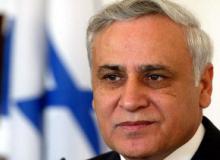
JNN 01 Jan 2011 : The Tel Aviv district court on Thursday convicted Katsav on two counts of rape and other sex abuse charges, declaring that the ex-president’s version of events was “riddled with lies.”

The verdict was handed down more than four years after complaints surfaced severe sexual offenses against his employees.

Katsav was convicted of raping and sexually abusing a former employee from the tourism ministry. He was also convicted of sexually harassing two other women from the president’s residence.

The year-long trial took place almost entirely behind closed doors on Thursday morning.

The verdict came one year and a half after the start of his trial and 12 years after allegedly committing the first of the offenses with which he was charged.

The conviction means Katsav will face a minimum of four years in prison.

The 65-year-old Katsav resigned in 2007 and was replaced by Shimon Peres.

Israel’s Ex-President Convicted on Rape Charges


JNN 01 Jan 2011 : The Tel Aviv district court on Thursday convicted Katsav on two counts of rape and other sex abuse charges, declaring that the ex-president’s version of events was “riddled with lies.”

The verdict was handed down more than four years after complaints surfaced severe sexual offenses against his employees.

Katsav was convicted of raping and sexually abusing a former employee from the tourism ministry. He was also convicted of sexually harassing two other women from the president’s residence.

The year-long trial took place almost entirely behind closed doors on Thursday morning.

The verdict came one year and a half after the start of his trial and 12 years after allegedly committing the first of the offenses with which he was charged.

The conviction means Katsav will face a minimum of four years in prison.

The 65-year-old Katsav resigned in 2007 and was replaced by Shimon Peres.

Mecca flash floods claim four lives


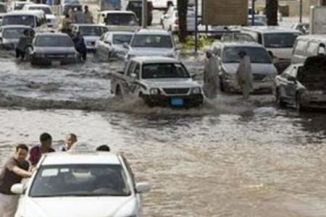
JNN 31 Dec 2o10 : At least four people, including three children, have died in flash flooding around the holy city of Mecca in Saudi Arabia, reports indicate.

Local officials say at least 200 people have so far been rescued from the flooding caused by heavy rains.

In Jeddah, the country’s second largest city, several major roads were inundated and traffic came to a virtual halt after dozens of cars broke down.

Authorities said the Jeddah flooding caused no casualties, but many residents found their homes overwhelmed by high water, which in some districts was reported knee-high and in others as high as the waist.

Jeddah was hit by another major flood last November which killed 123 people and caused extensive damage.

According to official figures, thousands of families lost their homes in that flood, which destroyed nearly 11,000 buildings and as many vehicles.


Saudi Shia and Sunni Muslims Sign a Document of Reconciliation After the Events of Ashura


JNN 29 Dec 2010 : Saudi Shia and Sunni figures in Medina signed a document to “live as one family”, a week after the clashes that took place between the parties on Ashura.

Hundreds of radical Wahhabis from Al-Ansar attacked with sticks and stones to the Shia citizens when mourning for Imam Hussain (A.S) in Ashura in Quba district on last Thursday, which many Shias arrested.

According to Rassid news network, the paper was inked yesterday, December 25, under the title of “Peaceful Co-existence like a Single Family” following a strife caused by a group of Wahabi extremists on the day of Ashura.

Expressing his deep regret for the event, Abdul-Aziz ibn Majid referred to Islam as a comprehensive religion that is against creating discord or forming various religious sects.

Warning those who intrude social order and security, he urged all Shia and Sunni thinkers to dispel the existing bilateral tensions by holding a joint seminar in Saudi Arabia.

The document was the first reconciliation paper inked between the Shia and Sunni. At the signing ceremony some 200 top Shia and Sunni figures and a number of Suadi Arabia’s officials including Taher Al-Hajuj, Saleh al-Jodan, Feysal Aburabae and Solemian Al-saedi were present.

On this year’s day of Ashura in the holy city of Medina, the Shia mourners were attacked by a group of Wahabi extremists. The strife led to some injuries and damages, and was finally stopped by the security forces who arrested 50 individuals


Oil prices highest in two years, pushing closer to $100


JNN 28 Dec 2010 : Global oil prices are pushing closer to $100 a barrel as the cold weather around the world has raised demand.

Benchmark Brent crude closed 48 cents down at more than $93 on Friday after hitting nearly $95 earlier in the day, the highest level since October 2008.

The rally in Brent crude is partly due to the severe cold snap in Europe, with more freezing temperatures and snow predicted in parts of Europe over the weekend expected to boost fuel demand.

Meanwhile, a group of OPEC ministers is scheduled to meet in Egypt this weekend to discuss oil production and prices, but analysts predict more gains for oil prices in the coming week.

“The reality is that the growth of emerging markets is driving up oil prices, but oil prices are not restraining emerging economies in any significant way,” Reuters quoted Sara Johnson, senior research director of global economics at IHS Global Insights in Lexington, Massachusetts, as saying.

Higher prices can reduce demand and boost production costs, but the impact will not be that great as many countries have fuel subsidies, which ease manufacturing, transportation, and consumer costs, she stated.


Saudia Arabia's future Unknown


JNN 28 Dec 2010 : Rex mortuus est, vivat rex! The king is dead; long live the king! For thousands of years, in monarchies across the globe, that phrase has heralded the end of one era and the beginning of another.

It is difficult for people in democracies, who elect a new chief executive every few years, to appreciate the true import of those words. But in Saudi Arabia, one of the world’s few remaining absolute monarchies, a new king is in the process of being ushered into office while his predecessor remains very much alive. And despite the ambiguity of the situation, whoever eventually occupies the Saudi throne will dramatically affect not only the Kingdom of Saudi Arabia (KSA), but the entire Mideast. 

In order to fully grasp the situation, we must first understand the Saudi system of succession, which is somewhat different from that of most monarchies. Many of us are familiar with the law of primogeniture, on which the succession of most monarchs is based. According to that law, when a king dies, his eldest son inherits the throne and if that son dies without issue, the king’s next oldest son inherits and so forth. 

The Saudi monarchy, however, operates in a different manner. In the Kingdom, the order of succession (which is determined within and by the House of Saud), has been, so far, limited to the sons of the dynasty’s original founder, Abdul Aziz ibn Saud, who established the Kingdom of Saudi Arabia in 1932. Since his death in 1953, five of his sons, Saud, Faisal, Khalid, Fahd and Abdullah have, in turn, occupied the throne. Thus, to date, no one but Ibn Saud and his sons has yet been king. 

Upon the death of King Fahd and the ascension to the throne of the present monarch, King Abdullah (in 2005), their younger brother, Sultan became heir apparent or crown prince. At 82 years of age, Prince Sultan is not much younger than the 86-year-old king. And considering the fact that the prince is believed to be suffering from cancer (in 2004 he was diagnosed with colon cancer), there is no guarantee that he will ever rule. 

Of Abdul Aziz’s many sons, 20 are still alive, so King Abdullah and Prince Sultan have 18 brothers. Most of them, however, are either too old to rule, or lack the experience to do so, which leaves only two brothers, who are considered eligible. They are 77-year-old Nayef and 71-year-old Salman. 

And that brings us to the controversy surrounding Prince Nayef. As the second in line after the ailing crown prince, Nayef, who now serves as Second Deputy Prime Minister (and since 1975, as Minister of the Interior), is believed by many to be the one, who will eventually occupy the Saudi throne. But unlike the moderate Abdullah, Nayef is known to be a pro-Wahhabist and one of the most conservative members of the royal family – which has given many of the more tolerant elements in the Mideast cause for worry. 

In fact, according to a 2003 New York Times article, the Minister of the Interior’s promotion of extremist elements in the past was sufficiently extensive to sound the alarm in Washington and prompt US Senator Charles E. Schumer (Democrat of New York) to write a letter to then Saudi Ambassador to the United States, Prince Bandar, asking that Nayef be removed from office due to his “well-documented history of suborning terrorist financing and ignoring the evidence when it comes to investigating terrorist attacks on Americans.” 

If those, in the inner political circles are to be believed, the ‘leopard has not changed his spots.’ As a diplomat, well-acquainted with the inner workings of the Kingdom, who preferred (for obvious reasons) to remain anonymous, recently observed, “He (Nayef) is a conservative who will give more rope to the religious establishment than any of his brothers would,” which, if true, bodes ill for internal reforms and foreign relations, alike. 

Moreover, Abdullah’s ongoing reforms aimed at solving the country’s unemployment problems and curbing extremism by improving education, making it easier for women to work and retraining sharia judges, will probably be abandoned. 

Those reform programs appear to have already given the economy a jump-start. According to an article on the NASDAQ website, they have “opened up sectors of the economy previously barred to private investors, led to the privatization of some big state companies and included development of the capital markets.” 

Such improvements will most likely be stopped in their tracks if Nayef becomes king, because the prince has, since his appointment as interior minister, 35 years ago, gained a reputation for maintaining close ties with Wahhabists (a powerful group of religious extremists), who are strongly opposed to such changes. And as author Steffen Hertog, who wrote a book about Saudi internal politics, titledPrinces, Brokers and Bureaucrats, pointed out, Nayef has already obstructed some (economic) reforms in his role as Interior Minister. 

Nevertheless, there is little doubt that he will be the next king. “It looks more plausible than not that Nayef will become the crown prince after Abdullah dies and he is already taking more control in the day-to-day running of the kingdom,” Hertog observed. 

Institute for (Persian) Gulf Affairs (IGA) Director, Ali al-Ahmad, agrees. In a recent interview with Press TV, he said, “It is true that a name, Crown Prince Sultan, for example, is in Riyadh, but he is not meeting people and he is not issuing policy.” 

“It is the third man, Nayef, who is traveling and attending Arab Countries’ on the (Persian) Gulf meetings … He is the one, who is issuing policy and orders.” 

The official went on to explain that Abdullah, due to his age and infirmities (caused by his recent surgery), is out of the picture, and there are strong doubts as to whether Sultan, who is also elderly and suffers from poor health, will ever ascend the throne. So that leaves Nayef, who is actually running the country. Ahmed went on to say that he believes the prince will use the present circumstances to “spread his power and influence to make sure that he becomes the king of Saudi Arabia,” possibly, within a matter of months. 

But what will happen when – and if – this pro-Wahhabi prince actually does become king? 

Well, firstly, it will probably help strengthen the monarchy and the House of Saud among conservative Saudi elements. Within the past decades, the royal family has, on various occasions, drawn criticism from Sunni conservatives – not only for the excess of some of its members, but for attempts by several of its monarchs to introduce modernization and tolerance. 

Therefore, since much of the dynasty’s raison d’etre stems from its affiliation with Wahhabism and its role as the guardian of Sunni orthodoxy, a conservative, pro-Wahhabi king would, in the eyes of many Saudis, exonerate the House of Saud and entrench it more firmly than ever. 

At the same time, Nayef at the governmental helm would only serve to dash the hopes of both the country’s women and its Shia population. Shias, a long-suppressed minority in Saudi Arabia, could most likely anticipate further suppression – possibly to the point of persecution. And this treatment would be based on the prevalent political climate at a given time. If the Kingdom were embroiled in a conflict with Shias in another country, Shias in Saudi Arabia would probably feel the effects in a new wave of suppression and/or persecution. 

As far as Saudi women are concerned, the meager gains they have made du

ring Abdullah’s reign would most likely be forfeited. What else could they expect from a ruler, who, according to The Washington Institute for Near East Policy (a US think tank), publicly stated a month after King Abdullah’s announced appointment of the first female deputy minister, that he saw no need for either elections or female members of parliament? 

It might be mentioned at this point that Saudi Arabia, as an absolute monarchy, does not even possess a parliament. Instead it has a consultative ‘Shura Council,’ which is made up of exclusively male members appointed by the king. And the closest thing the Kingdom has ever had to elections, was a series of limited polls (for male participants, only), held in 2005 for some municipal councils. 

An ultra-conservative on the throne of the world’s biggest oil producer will also undoubtedly affect the country’s foreign relations, which will be felt first – and most strongly – throughout the already precarious Middle East. For starters, we can probably anticipate further Saudi interference in Iraq, Lebanon and Yemen, three countries, in which Shias have gained a foothold. 

On the other hand, there is a possibility that none of these scenarios will pan out. Despite Nayef’s hard-line reputation, historians say that Saudi leaders have always been pragmatists in their actual dealings, giving stability priority over ideology. 

And according to Hertog, Nayef’s conservatism is overstated. “As king you have to take different policy positions than as interior minister,” the expert said, “because you have a different constituency.” He went on to explain that Nayef’s opposition to reform “might have been due to security concerns and bureaucratic infighting rather than an ideological dispute.” 

There is a basis for such reasoning. Saudi Arabia is vulnerable security-wise, as assassinations and terrorist attempts in the past have demonstrated. And the rivalry and rifts within the royal family are well-known. 

So what will actually happen when Saudi Arabia gains a new king? We can only guess.


Saudia Arabia’s future Unknown


JNN 28 Dec 2010 : Rex mortuus est, vivat rex! The king is dead; long live the king! For thousands of years, in monarchies across the globe, that phrase has heralded the end of one era and the beginning of another.

It is difficult for people in democracies, who elect a new chief executive every few years, to appreciate the true import of those words. But in Saudi Arabia, one of the world’s few remaining absolute monarchies, a new king is in the process of being ushered into office while his predecessor remains very much alive. And despite the ambiguity of the situation, whoever eventually occupies the Saudi throne will dramatically affect not only the Kingdom of Saudi Arabia (KSA), but the entire Mideast. 

In order to fully grasp the situation, we must first understand the Saudi system of succession, which is somewhat different from that of most monarchies. Many of us are familiar with the law of primogeniture, on which the succession of most monarchs is based. According to that law, when a king dies, his eldest son inherits the throne and if that son dies without issue, the king’s next oldest son inherits and so forth. 

The Saudi monarchy, however, operates in a different manner. In the Kingdom, the order of succession (which is determined within and by the House of Saud), has been, so far, limited to the sons of the dynasty’s original founder, Abdul Aziz ibn Saud, who established the Kingdom of Saudi Arabia in 1932. Since his death in 1953, five of his sons, Saud, Faisal, Khalid, Fahd and Abdullah have, in turn, occupied the throne. Thus, to date, no one but Ibn Saud and his sons has yet been king. 

Upon the death of King Fahd and the ascension to the throne of the present monarch, King Abdullah (in 2005), their younger brother, Sultan became heir apparent or crown prince. At 82 years of age, Prince Sultan is not much younger than the 86-year-old king. And considering the fact that the prince is believed to be suffering from cancer (in 2004 he was diagnosed with colon cancer), there is no guarantee that he will ever rule. 

Of Abdul Aziz’s many sons, 20 are still alive, so King Abdullah and Prince Sultan have 18 brothers. Most of them, however, are either too old to rule, or lack the experience to do so, which leaves only two brothers, who are considered eligible. They are 77-year-old Nayef and 71-year-old Salman. 

And that brings us to the controversy surrounding Prince Nayef. As the second in line after the ailing crown prince, Nayef, who now serves as Second Deputy Prime Minister (and since 1975, as Minister of the Interior), is believed by many to be the one, who will eventually occupy the Saudi throne. But unlike the moderate Abdullah, Nayef is known to be a pro-Wahhabist and one of the most conservative members of the royal family – which has given many of the more tolerant elements in the Mideast cause for worry. 

In fact, according to a 2003 New York Times article, the Minister of the Interior’s promotion of extremist elements in the past was sufficiently extensive to sound the alarm in Washington and prompt US Senator Charles E. Schumer (Democrat of New York) to write a letter to then Saudi Ambassador to the United States, Prince Bandar, asking that Nayef be removed from office due to his “well-documented history of suborning terrorist financing and ignoring the evidence when it comes to investigating terrorist attacks on Americans.” 

If those, in the inner political circles are to be believed, the ‘leopard has not changed his spots.’ As a diplomat, well-acquainted with the inner workings of the Kingdom, who preferred (for obvious reasons) to remain anonymous, recently observed, “He (Nayef) is a conservative who will give more rope to the religious establishment than any of his brothers would,” which, if true, bodes ill for internal reforms and foreign relations, alike. 

Moreover, Abdullah’s ongoing reforms aimed at solving the country’s unemployment problems and curbing extremism by improving education, making it easier for women to work and retraining sharia judges, will probably be abandoned. 

Those reform programs appear to have already given the economy a jump-start. According to an article on the NASDAQ website, they have “opened up sectors of the economy previously barred to private investors, led to the privatization of some big state companies and included development of the capital markets.” 

Such improvements will most likely be stopped in their tracks if Nayef becomes king, because the prince has, since his appointment as interior minister, 35 years ago, gained a reputation for maintaining close ties with Wahhabists (a powerful group of religious extremists), who are strongly opposed to such changes. And as author Steffen Hertog, who wrote a book about Saudi internal politics, titledPrinces, Brokers and Bureaucrats, pointed out, Nayef has already obstructed some (economic) reforms in his role as Interior Minister. 

Nevertheless, there is little doubt that he will be the next king. “It looks more plausible than not that Nayef will become the crown prince after Abdullah dies and he is already taking more control in the day-to-day running of the kingdom,” Hertog observed. 

Institute for (Persian) Gulf Affairs (IGA) Director, Ali al-Ahmad, agrees. In a recent interview with Press TV, he said, “It is true that a name, Crown Prince Sultan, for example, is in Riyadh, but he is not meeting people and he is not issuing policy.” 

“It is the third man, Nayef, who is traveling and attending Arab Countries’ on the (Persian) Gulf meetings … He is the one, who is issuing policy and orders.” 

The official went on to explain that Abdullah, due to his age and infirmities (caused by his recent surgery), is out of the picture, and there are strong doubts as to whether Sultan, who is also elderly and suffers from poor health, will ever ascend the throne. So that leaves Nayef, who is actually running the country. Ahmed went on to say that he believes the prince will use the present circumstances to “spread his power and influence to make sure that he becomes the king of Saudi Arabia,” possibly, within a matter of months. 

But what will happen when – and if – this pro-Wahhabi prince actually does become king? 

Well, firstly, it will probably help strengthen the monarchy and the House of Saud among conservative Saudi elements. Within the past decades, the royal family has, on various occasions, drawn criticism from Sunni conservatives – not only for the excess of some of its members, but for attempts by several of its monarchs to introduce modernization and tolerance. 

Therefore, since much of the dynasty’s raison d’etre stems from its affiliation with Wahhabism and its role as the guardian of Sunni orthodoxy, a conservative, pro-Wahhabi king would, in the eyes of many Saudis, exonerate the House of Saud and entrench it more firmly than ever. 

At the same time, Nayef at the governmental helm would only serve to dash the hopes of both the country’s women and its Shia population. Shias, a long-suppressed minority in Saudi Arabia, could most likely anticipate further suppression – possibly to the point of persecution. And this treatment would be based on the prevalent political climate at a given time. If the Kingdom were embroiled in a conflict with Shias in another country, Shias in Saudi Arabia would probably feel the effects in a new wave of suppression and/or persecution. 

As far as Saudi women are concerned, the meager gains they have made during Abdullah’s reign would most likely be forfeited. What else could they expect from a ruler, who, according to The Washington Institute for Near East Policy (a US think tank), publicly stated a month after King Abdullah’s announced appointment of the first female deputy minister, that he saw no need for either elections or female members of parliament? 

It might be mentioned at this point that Saudi Arabia, as an absolute monarchy, does not even possess a parliament. Instead it has a consultative ‘Shura Council,’ which is made up of exclusively male members appointed by the king. And the closest thing the Kingdom has ever had to elections, was a series of limited polls (for male participants, only), held in 2005 for some municipal councils. 

An ultra-conservative on the throne of the world’s biggest oil producer will also undoubtedly affect the country’s foreign relations, which will be felt first – and most strongly – throughout the already precarious Middle East. For starters, we can probably anticipate further Saudi interference in Iraq, Lebanon and Yemen, three countries, in which Shias have gained a foothold. 

On the other hand, there is a possibility that none of these scenarios will pan out. Despite Nayef’s hard-line reputation, historians say that Saudi leaders have always been pragmatists in their actual dealings, giving stability priority over ideology. 

And according to Hertog, Nayef’s conservatism is overstated. “As king you have to take different policy positions than as interior minister,” the expert said, “because you have a different constituency.” He went on to explain that Nayef’s opposition to reform “might have been due to security concerns and bureaucratic infighting rather than an ideological dispute.” 

There is a basis for such reasoning. Saudi Arabia is vulnerable security-wise, as assassinations and terrorist attempts in the past have demonstrated. And the rivalry and rifts within the royal family are well-known. 

So what will actually happen when Saudi Arabia gains a new king? We can only guess.


Activists to launch anti-Israeli ads in US


JNN 25 Dec 2010 : A group of US peace activists have planned to launch a campaign to condemn the Zionist regime crimes against Palestinians and to protest Washington’s support for Tel Aviv.

According to AFP, the Seattle Mideast Awareness Campaign decided to plaster anti-Israel ads on the sides of 12 local commuter buses starting Monday, on the third anniversary of the start of Israel’s war against the Gaza Strip.

“Israeli war crimes: your tax dollars at work,” has been written on the buses with pictures of Palestinian children standing around a demolished building.

The Zionist regime offensive against the coastal enclave, which began in December 2008, killed more than 1,400 Palestinians, mostly women and children.

Seattle activist Ed Mast said he was protesting a 2007 promise by the United States to give 30 billion dollars in military aid to Israel over the next decade.

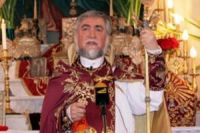
Iran, Best model of Interaction among Religions


JNN 25 Dec 2010 : Prelate of the Diocese of Lebanon Archbishop Aram Keshishian referred to the Islamic Iran on Friday as the best model of interaction among different religions in the world.

According to IRNA, he made the remarks during a meeting with a group of managers and editors-in-chief of Iran’s major newspapers and news agencies who arrived in Beirut on Thursday on a week-long visit.

Archbishop Keshishian said that followers of all divine religions, including Armenians, were living freely in Iran.

Praising the way that Iran’s leadership and its government were treating Armenians in that country; the Archbishop said that Iranian Armenians even had two representatives in the country’s Parliament (Majlis).

Condemning any type of sacrilege against values of divine religions, Archbishop Keshishian called on leaders of different religions to make more interactions to prevent any violation against religious values in the future.

He also referred to the recent visit of President Mahmoud Ahmadinejad of Iran to Lebanon noting that Tehran-Beirut ties were on the rise.

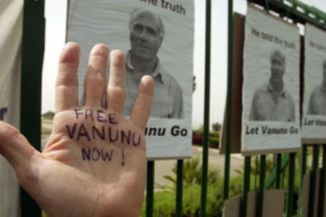
Zionist Regime of Tel Aviv bars Vananu trip for award


JNN 22 Dec 2010 : Vanunu made headlines in 1986, when he divulged shocking secrets about Tel Aviv’s nuclear activities. He was kidnapped later in Italy by Mossad’s special agents and sentenced to 18 years behind bars.

Tel Aviv has denied permission for former Israeli nuclear technician Mordechai Vanunu to leave Israel in order to collect an international award in Berlin.


A host of elites and Nobel laureates, including Irish peace activist Mairead Maguire and German writer Gunter Grass, have called on Israel to allow Vanunu to attend the International League of Human Rights prize ceremony scheduled for December 12.
Vanunu has been named as this year’s recipient of the Carl von Ossietzky Medal.

The prize is named after the renowned German pacifist, who had opposed the Nazi regime, and who was later held in a concentration camp and murdered.

Ossietzky is also famous to have been denied the Nobel Peace Prize laureate as a result of Nazi Germany’s unwillingness to allow the peace activist to leave its border when he was named laureate in 1935.

Vanunu made headlines in 1986, when he divulged shocking secrets about Tel Aviv’s nuclear activities in an interview with a British newspaper, The Sunday Times.

The disclosure cracked the secrecy around the assumed Israeli nuclear arsenal.

The Moroccan-born scientist was kidnapped later in Italy by Mossad’s special agents and sentenced to 18 years behind bars.

He reportedly spent 11 years of his prison term in solitary confinement.

Vanunu was released from prison in 2004, but has not been allowed to leave Israel.

During recent years the former technician at Israel’s main atomic reactor, Dimona, has constantly protested against the Tel Aviv-imposed restrictions and his lack of freedom and has appealed to international bodies for help.

In 2007, the controversial figure was once again sentenced to six months in jail for violating the terms of his parole.

Vanunu who has converted to Christianity has become a hero for many peace activists, and was nominated several times for a Nobel Prize.

In March 2009, he responded by writing the following to the Nobel Peace Prize Committee:

“I am asking the committee to remove my name from the list for this year’s list of nominations,” he said, arguing that “I cannot be part of a list of laureates that includes (Israeli President) Shimon Peres. He is the man who was behind all the Israeli atomic policy.”

Ashura Comemorations In Bahrain , Kuwait and Saudia Arabia


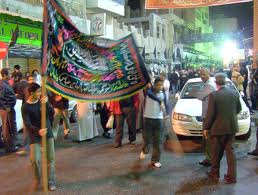
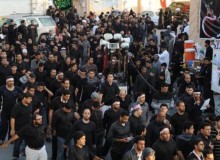
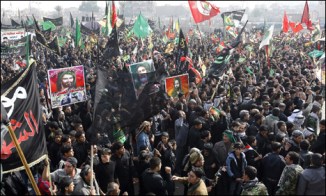
JNN 18 Dec 2010 – MANAMA, Bahrain:  Thousands of Shiite Muslims in Bahrain and eastern Saudi Arabia marked Ashura on Thursday, commemorating the Martydom of the  grandson of the Prophet Mohammed , Hussein Ibn e Ali A.S with processions and cries of mourning.

In Manama, processions took place in the narrow streets of the old city, which is dotted with Shiite places of worship. Bahrain is ruled by a Sunni dynasty but the majority of its population is Shiite.

A number of Shiites Also attended the Procession from nearby Saudi Arabia, where they make up 10 percent of the population, and Kuwait, where they are about a third of the population, came to Bahrain to participate in the processions.

The colour black dominated the occasion, which marks the martyrdom of Hussein (A.S), a grandson of the Prophet Mohammed (pbuh) and the third Shiite imam, in 680 AD by the forces of the Omayyad Caliph Yazid (L.A) in a battle in Karbala, Iraq.

Men covered their heads in dust, crying “Hussein, Hussein,” expressing regret that the faithful did not rescue the imam when he was besieged in the Iraqi desert.

Women, who usually do not participate in Ashura processions, did so in Bahrain this year.

The processions in Bahrain were supervised by volunteers and security services, and no incidents were reported.

Saudi Shiites complain of marginalisation and segregation in the Gulf kingdom dominated by Wahhabism, a strictly puritanical form of Sunni Islam.

In Kuwait, members of the Shiite community marked Ashura inside their places of worship, as street processions are banned.

Saudi Shia’s Attacked by local Wahabis on Ashura Procession


JNN 18 Dec 2010 Medina : Shia participants were attacked by local Wahabi’s in Medina, when the Shia Citizens where taking out the Ashura Procession .

Saudi Shia sources said “Saudi security forces failed to provide security to Shia Citizens of Saudia Arabia as they were attacked by the local Wahabi’s  , which may have been avoided if the security forces would have planned earlier to safe gaurd the Shia Citizens who were  attending there Ashura Processin , But the security forces came late and Wahabis attacked the Participants of the Procession of Ashura ,and due to which fights broke out between Shiites and Wahhabis during the Ashura mourning procession in Medina on Thursday”.

According to Saudi Media, Shia Muslims are under severe restrictions and discriminations by ignorant Wahhabi sects, but the Saudi government denies the accusations.

Ignorant Wahhabis attacked number of Shiites with stones when they were perfrming Ashura rituals in Medina, the incident was happened near the famous mosque of Quba.

A journalist said Reuters “Security forces came to disperse the crowds”.

Saudi Wahhabi forces arrested 38 Shia mourner in the holy city of Medina after fighting erupted near Islam’s oldest mosque Al-Quba on the Shiite religious holiday of Ashura, Saudi media reported on Saturday.

“Several people suffered minor injuries in Thursday’s clashes between Wahhbais and Shias”, the press reports said..

Three security officials were also wounded, the Al-Madina newspaper said.

According to Rasid the fighting pitted members of Saudi Arabia’s Shiite minority against majority Wahhbais.

Many of the kingdom’s top Wahhabi clerics have condemned Shiites as having rejected “true” Islam.


Officials say that the Shiites make up ten percent of the population of Saudi Arabia, but diplomats estimate the figure more than 15 percent.

Saudi Shia's Attacked by local Wahabis on Ashura Procession


JNN 18 Dec 2010 Medina : Shia participants were attacked by local Wahabi’s in Medina, when the Shia Citizens where taking out the Ashura Procession .

Saudi Shia sources said “Saudi security forces failed to provide security to Shia Citizens of Saudia Arabia as they were attacked by the local Wahabi’s  , which may have been avoided if the security forces would have planned earlier to safe gaurd the Shia Citizens who were  attending there Ashura Processin , But the security forces came late and Wahabis attacked the Participants of the Procession of Ashura ,and due to which fights broke out between Shiites and Wahhabis during the Ashura mourning procession in Medina on Thursday”.

According to Saudi Media, Shia Muslims are under severe restrictions and discriminations by ignorant Wahhabi sects, but the Saudi government denies the accusations.

Ignorant Wahhabis attacked number of Shiites with stones when they were perfrming Ashura rituals in Medina, the incident was happened near the famous mosque of Quba.

A journalist said Reuters “Security forces came to disperse the crowds”.

Saudi Wahhabi forces arrested 38 Shia mourner in the holy city of Medina after fighting erupted near Islam’s oldest mosque Al-Quba on the Shiite religious holiday of Ashura, Saudi media reported on Saturday.

“Several people suffered minor injuries in Thursday’s clashes between Wahhbais and Shias”, the press reports said..

Three security officials were also wounded, the Al-Madina newspaper said.

According to Rasid the fighting pitted members of Saudi Arabia’s Shiite minority against majority Wahhbais.

Many of the kingdom’s top Wahhabi clerics have condemned Shiites as having rejected “true” Islam.


Officials say that the Shiites make up ten percent of the population of Saudi Arabia, but diplomats estimate the figure more than 15 percent.

‘Coup may happen in Saudi Arabia’


JNN 18 Dec 2010 : A political analyst has said that a coup could happen in Saudi Arabia, with the health issues of the elderly monarch providing an opportunity for the plotters.

“It is possible that a coup could happen, and I see nothing to prevent that from happening,” Dr. Kamal Helbawy of the Center for the Study of Terrorism said in an interview with JNN on Saturday.

“Both in Qatar and Oman in the past, the sons of the kings stole the leadership from their fathers, and I think there is a rift in the house of Saud,” he added.

Saudi Arabia’s King Abdullah was hospitalized in the United States on November 22 for a debilitating herniated disc, complicated by a hematoma that put pressure on his spine.

Saudi Health Minister Abdullah al-Rabeeah said the state of the monarch’s health was “very reassuring” following the first operation on his disc.

Earlier in the month, US surgeons performed another operation on the monarch’s back, which was reported to have gone smoothly.

“With his old age and sickness, there is suspicion about succession. There has been tension in the family for several decades. I believe there is a political and religious crisis,” Helbawy said.

King Abdullah has left his half-brother, Crown Prince Sultan bin Abdul-Aziz, who is thought to be suffering from cancer, at the helm.

The prolonged convalescence of the Saudi ruler has raised doubts about King Abdullah’s succession.


'Coup may happen in Saudi Arabia'


JNN 18 Dec 2010 : A political analyst has said that a coup could happen in Saudi Arabia, with the health issues of the elderly monarch providing an opportunity for the plotters.

“It is possible that a coup could happen, and I see nothing to prevent that from happening,” Dr. Kamal Helbawy of the Center for the Study of Terrorism said in an interview with JNN on Saturday.

“Both in Qatar and Oman in the past, the sons of the kings stole the leadership from their fathers, and I think there is a rift in the house of Saud,” he added.

Saudi Arabia’s King Abdullah was hospitalized in the United States on November 22 for a debilitating herniated disc, complicated by a hematoma that put pressure on his spine.

Saudi Health Minister Abdullah al-Rabeeah said the state of the monarch’s health was “very reassuring” following the first operation on his disc.

Earlier in the month, US surgeons performed another operation on the monarch’s back, which was reported to have gone smoothly.

“With his old age and sickness, there is suspicion about succession. There has been tension in the family for several decades. I believe there is a political and religious crisis,” Helbawy said.

King Abdullah has left his half-brother, Crown Prince Sultan bin Abdul-Aziz, who is thought to be suffering from cancer, at the helm.

The prolonged convalescence of the Saudi ruler has raised doubts about King Abdullah’s succession.


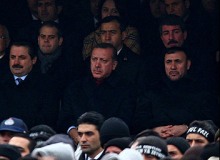
Erdogan Attends Ashura Ceremony in Istanbul, Addresses Mourners


JNN 17 Dec 2010 Ankara :Thousands of Turkish Shia braved freezing temperatures to commemorate the day of Ashura. There was a huge turnout at the Ashura  Muharram in Turkey where marches and mourning consolations were taking place in Ankara and Istanbul, and many other places. Erdogan delivered a speech about the moral meanings of the occasion.

Senior adviser to the Leader of the Islamic Revolution, Ali Akbar Velayati, was among the attendees in the ceremony and addressed the mourners describing the third Shia Imam, Imam Hussein (PBUH), as the symbol of fight against oppression.

Erdogan attended the ceremony this year for the first time since his AK party came to power in 2002.

Erdogan, who is a follower of the Hanafi school of the Sunni branch of Islam, delivered a speech at the ceremony, in which he discussed the importance of unity between Shia and Sunni Muslims.

“We have been feeling the pain of Karbala for 1,370 years. We have to feel that pain in our hearts. We remember (Imam) Hussein (AS) whenever an innocent person is killed,” the Turkish prime minister said as he began his speech.

“This country is ours, these lands are all ours, this history, this civilization is ours. Nobody can claim superiority to any other. We are equal to each other and we are all brothers in these lands. We are all first-class citizens of this country. The problems of all religious groups in my country are mine. That’s why we are struggling to address century-old problems through consensus. Aren’t there those who oppose us? Of course, there are. But we will overcome this with patience,” Erdogan added.

Erdogan’s participation in Ashura ceremony is a sign of Islamic unity

Addressing the Ashura mourners in Istanbul, Velayati described Erdogan’s participation in the ceremony as an extremely significant symbol of Islamic unity.

He also pointed to Turkey’s role in defending Islamic values and foiling plots against Muslim countries.

Ashura symbolizes unity among Muslims, justice, devotion, and the struggle against oppression, Velayati added.

He said that Imam Hussein’s uprising was aimed at reviving Islam and teaching Muslims to rise against bullying powers. Velayati also called on all Muslims to stand for the rights of Palestinians. He said that Muslim countries were obliged to defend the Palestinian nation in the asymmetrical war against Israel.

Velayati noted that the Gaza siege was a clear sign of Israel’s tyranny against Muslims and the people of Gaza, adding that the teachings of Imam Hussein (PBUH) tasked Muslims to extend assistance to the Palestinian nation. He also highlighted Turkey’s status in defending Islamic values and confronting conspiracies against Muslim countries.

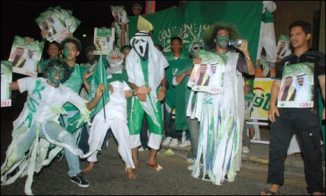
Saudi’s Molesting Islam , Halloween Party in Jeddah, reveals WikiLeaks


JNN 16 Dec 2010 JEDDAH: US diplomat in Saudi Arab described in the cable that he attended the underground Halloween Party in Jeddah in 2009 where Saudi Princes among more than 150 Saudi men and women were present, most in their 20s and 30s.

The cable also revealed that the Halloween Party broke all the country’s Islamic taboos.

A US company also put up some of the finance, cable added.

US diplomat also told that the party was held under strict security.

“Behind the facade of Wahabi conservatism in the streets, the underground nightlife for Jeddah’s elite youth is thriving and throbbing,” the cable begins.

In evidence, then Consul General Martin Quinn refers to a Halloween party last year. The redacted cable reads: “Along with over 150 young Saudis (men and women mostly in their 20s and early 30s), ConGenOffs accepted invitations to an underground Halloween party at Prince XXXX residence in Jeddah on XXXX.”

“The scene resembled a nightclub anywhere outside the Kingdom: plentiful alcohol, young couples dancing, a DJ at the turntables, and everyone in costume,” it said.

The notorious Vice Police were nowhere to be seen “because the religious police keep their distance when parties include the presence or patronage of a Saudi royal and his circle of loyal attendants.” There are literally thousands of princes in Saudi Arabia, but the host of this event was able to trace his lineage back to a direct ancestor of King Abdullah.

As for the details of the party, the cable continues: “The hired Filipino bartenders served a cocktail punch using sadiqi, a locally-made moonshine…. It was also learned through word-of-mouth that a number of the guests were in fact ‘working girls,’ not uncommon for such parties.”

The cable goes on to make the point that black-market liquor is prohibitively expensive — even for princes. A bottle of Smirnoff vodka might cost the equivalent of $400. “Additionally, though not witnessed directly at this event, cocaine and hashish use is common in these social circles and has been seen on other occasions,” it adds.

The Consul General draws an interesting conclusion at the end of his dispatch. “Parties of this nature and scale are believed to be a relatively recent phenomenon in Jeddah. …It is not uncommon in Jeddah for the more lavish private residences to include elaborate basement bars, discos, entertainment centers and clubs.”

“As one high society Saudi remarked, “The increased conservatism of our society over these past years has only moved social interaction to the inside of people’s homes.”

These acts done on the Holy land of Islam , shows the double standards and the real picture of the Wahabi rulers  which they  try to hide from the public eyes by force , and in private they enjoy there life with the enemies of Islam .

Saudi's Molesting Islam , Halloween Party in Jeddah, reveals WikiLeaks


JNN 16 Dec 2010 JEDDAH: US diplomat in Saudi Arab described in the cable that he attended the underground Halloween Party in Jeddah in 2009 where Saudi Princes among more than 150 Saudi men and women were present, most in their 20s and 30s.

The cable also revealed that the Halloween Party broke all the country’s Islamic taboos.

A US company also put up some of the finance, cable added.

US diplomat also told that the party was held under strict security.

“Behind the facade of Wahabi conservatism in the streets, the underground nightlife for Jeddah’s elite youth is thriving and throbbing,” the cable begins.

In evidence, then Consul General Martin Quinn refers to a Halloween party last year. The redacted cable reads: “Along with over 150 young Saudis (men and women mostly in their 20s and early 30s), ConGenOffs accepted invitations to an underground Halloween party at Prince XXXX residence in Jeddah on XXXX.”

“The scene resembled a nightclub anywhere outside the Kingdom: plentiful alcohol, young couples dancing, a DJ at the turntables, and everyone in costume,” it said.

The notorious Vice Police were nowhere to be seen “because the religious police keep their distance when parties include the presence or patronage of a Saudi royal and his circle of loyal attendants.” There are literally thousands of princes in Saudi Arabia, but the host of this event was able to trace his lineage back to a direct ancestor of King Abdullah.

As for the details of the party, the cable continues: “The hired Filipino bartenders served a cocktail punch using sadiqi, a locally-made moonshine…. It was also learned through word-of-mouth that a number of the guests were in fact ‘working girls,’ not uncommon for such parties.”

The cable goes on to make the point that black-market liquor is prohibitively expensive — even for princes. A bottle of Smirnoff vodka might cost the equivalent of $400. “Additionally, though not witnessed directly at this event, cocaine and hashish use is common in these social circles and has been seen on other occasions,” it adds.

The Consul General draws an interesting conclusion at the end of his dispatch. “Parties of this nature and scale are believed to be a relatively recent phenomenon in Jeddah. …It is not uncommon in Jeddah for the more lavish private residences to include elaborate basement bars, discos, entertainment centers and clubs.”

“As one high society Saudi remarked, “The increased conservatism of our society over these past years has only moved social interaction to the inside of people’s homes.”

These acts done on the Holy land of Islam , shows the double standards and the real picture of the Wahabi rulers  which they  try to hide from the public eyes by force , and in private they enjoy there life with the enemies of Islam .

Ashura commemorated in Karbala and around the world


JNN 16 Dec 2010 KARBALA: Iraq has arrested 73 Al-Qaeda-linked suspects officials said were implicated in plotting “chaos” during Ashura in Karbala, as two million pilgrims thronged the shrine city on Thursday.

The arrests underscored fears of violence during the 10-day Mourning Majalis and Processions that culminate on Friday, in a key test for Iraq’s security forces ahead of a complete withdrawal of American troops in a year.

Vehicle traffic in Karbala was brought to a virtual standstill as pilgrims were made to walk to the shrines of the revered Imams Hussein and Abbas, while all visitors were searched at checkpoints.

“We were able to destroy 14 terrorist cells and arrest 73 people, including 37 wanted persons,” Karbala provincial council chief Mohammed al-Mussawi said. “We seized lots of weapons, IEDs (improvised-explosive devices), explosives belts and equipment.

“If they had been able to mount their attacks during the pilgrimage, it would have created chaos. Karbala is the main target for terrorists during Ashura.”

Mussawi said those arrested were suspected members of Al-Qaeda.

Speaking on Wednesday, the Iraqi army commander responsible for security in five provinces including Karbala said those detained were implicated in an Al-Qaeda-linked group called the Boys of Heaven.

General Othman al-Ghanimi said a total of 80 suspects had been arrested.

Mussawi said the number of pilgrims in Karbala for the commemorations had reached two million, 238,000 of them from abroad.

Karbala police spokesman Major Alaa Abbas reported no incidents in the city so far. He said tight security arrangements would remain in force until the pilgrims had headed home after the ceremonies.

The deadliest Ashura attacks were in March 2004 when near-simultaneous bombings in Karbala and at a Shia mosque in Baghdad killed more than 170 people.

“Everything right now inside Karbala is good,” said 40-year-old Kadhim Hussein, a pilgrim from the southern port city of Basra. “We will continue our commemorations of Hussein’s martyrdom despite all the threats from enemies.”

BEIRUT

Massive crowds thronged streets across Lebanon on Thursday to mark the Shiite holy day of Ashura, responding in force to a call by Hezbollah chief Hassan Nasrallah the previous night.

A correspondent at the scene said tens upon tens of thousands of Nasrallah’s supporters lined the streets of the Hezbollah-controlled southern suburb of Beirut as the 10 days of rituals to mourn the Ashura.

TEHRAN

Millions of Iranians, beating themselves with fists and chains, marked the climax of Ashura on Thursday, a day after a suicide bomber killed 34 people taking part in a procession.

Men, women and children dressed in black gathered in cities across Iran as the 10 days of rituals to mourn the death of Imam Hussein, the faith’s third imam, reached a peak.

Iranian state television carried live footage of the Ashura processions in the capital Tehran, the second city of Mashhad, the Shiite clerical centre of Qom and the smaller cities of Yazd, Bam and Ardebil.

President Mahmoud Ahmadinejad was shown attending a gathering in south Tehran.

Crowds of mourners, meanwhile, were seen across Tehran staging short street plays depicting the Karbala battle which led to Imam Hussein’s A.S Martyrdom .

Chanting “Ya Hussein!” the crowds, many of them shirtless men beating their chests with their fists, set fire to makeshift tents and re-enacted the killing of Hussein as women and children watched, some with tears in their eyes.

Egypt Fueling Israel , sign natural gas deal


JNN 14 Dec 2010 : An Israeli firm has signed a multi-billion-dollar agreement with Egypt’s East Mediterranean Gas (EMG) company to buy Egyptian natural gas for the next 20 years.

Based on the contract, EMG will provide Leisrael 1.4 billion cubic meters of gas annually for 20 years, one of the shareholders in EMG said on Monday.

The gas delivery will begin in the first or second quarter of 2011. The 4.2-billion-dollar contract’s value is estimated to reach USD 10 billion over time.

The new deal is in addition to an agreement EMG signed in 2008 with US-Israeli consortium Yam Thetis to sell 2 billion cubic meters of natural gas through 2015, fertilizer and specialty chemical maker Israel Chemicals (ICL) said.

EMG is a joint company owned by Egyptian businessman Hussein Salem, Egypt Natural Gas Co, Thailand’s PTT, Israel’s Merhav Group, Ampal-American Israel Corp (AMPL.O) and American businessman Sam Zell.


Argentina recognizes Palestinian state


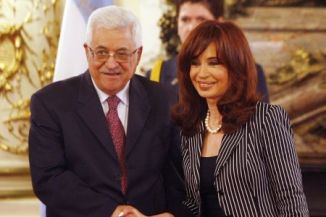
JNN 06 Dec 2010 : Argentina has become the second Latin American state after Brazil to recognize Palestine as an independent state.

In a letter to acting Palestinian Authority Chief Mahmoud Abbas on Monday, Argentine President Cristina Kirchner wrote that her country recognizes Palestine as a “free and independent state” as defined by the 1967 borders, AFP reported.

On Friday, the Brazilian Foreign Ministry announced that Brasilia recognizes the Palestinian state within the 1967 borders.

The Brazilian announcement came in a public letter in response to a personal request by Abbas on November 24.

The Brazilian letter expressed support for the Palestinians’ quest for a homeland as a “legitimate aspiration of the Palestinian people for a secure, united, democratic and economically viable state.”

The move has infuriated officials in Tel Aviv.

US Congressman Eliot Engel criticized the Brazilian move and said, “Brazil’s decision to recognize Palestine is severely misguided and represents a last gasp by a Lula-led foreign policy which was already substantially off track.”

The international community backs Palestinian demands for a state in most of the Gaza Strip, the West Bank and East al-Quds (Jerusalem), all territories occupied by Israel in the 1967 Six-Day War.


‘WikiLeaks another 9/11 of the Media , It only benefited Israel’


JNN 02 Dec 2010  : WikiLeaks is another drama Just like 9/11, which is again Played at the cost of Americans ,firstly it was at the cost of Human Lives ,and now at the cost of  Diplomatic Documents , which is organised by Mossad, and the best beneficiary of it is even the Israeli Government .

As now even the governments involved in it are the ones at the hit list of the Mossad .

If this would have been real leaks , American Govt would have up till now have there stance to attack that country , but as this time they cant afford to have another war front , so therefore this Documents Leak have to be from a person and country , which have to be Non Muslim , and from the Person and country which is an Ally , as they dont want to attack that country as this is in the game Plan .

The Documents and evidences are just what they want to be released so they can move ahead with there future planning of  this region. There had been no Wikileaks about there allies or there Diplomatic Missions . And it is there Media and there allies in the Media World whether Home or Abroad that they are Propagating these Bogus Documents so much that they looks real revelations to the common Man of this region and specially the Innocent American Citizens, which are being Played in the hands of Israeli Mosad, which is doing everything just at the cost of American Tax Payers .

Just the Language of the Documents shows that who has orchestrated this drama of leaks , which has been not planned in a day , while as per the finding of this corespondent The Wikileaks is not just a day’s affair or some amateur’s Hacking story , As if it would really be a hacking story of Any body  up till this time US Govt. Should have taken some serious steps , while they would not have been trying it to publicizing it more by giving it a full protocol even by commenting and calling the concerned persons , so it should be in the Headlines of that country , so who dont know should even know , about the biggest failure of the US Govt Machinery , as was in the case of 9/11 , where about 5 planes at the same time broke the rules , routes and ditched the best equipped Intelligence Network of the world and succeeded in hitting at there proposed targets. But as now the World is quite aware of the facts and figures , and the tactics they use to hood wink the whole of the world.

Another fact to be noted is that there is no revelations about the Best Ally of US i.e Israel , as the same was the case with the 9/11 drama, where thousand of American citizen died , but None of the Zionist Clan Jew  Died.

Israel, as opposed to others in the Middle East, has benefited from the alleged US documents, released by whistle blower website WikiLeaks, Turkey says.

“It seems to us that the country which … is not mentioned much, especially in the Middle East, or which this development seems to favor is Israel,” AFP quoted Turkey’s Interior Minister Besir Atalay as saying on Thursday.

The website has released thousands of reported United States diplomatic cables, leveling insult against some world statesmen, including Turkey’s Prime Minister Recep Tayyip Erdogan.

“This is how we see it in a way when we look in the context of who is benefitting and who is being harmed,” Atalay said.

The releases have said that the respected Turkish leader lacks “vision” and “analytic depth” and reads “minimally.”

The premier has said that the credibility of the website itself is “questionable,” DPA reported.

English-language Turkish newspaper Today’s Zaman has said that the documents, which have been reported by US and European news outlets, provided “often unflattering assessments” of foreign leaders.

Voicing doubt over the documents, Erdogan said, “That’s why we’re waiting to see what comes from WikiLeaks. Then we can evaluate it and give an opinion.”

“One should analyze why this happened, who did it and why, who is benefitting and who is being harmed,” said Atalay, who has ordered an investigation into the expositions.

Iranian President Mahmoud Ahmadinejad has also expressed doubt about the recently released documents, obtained and published by the WikiLeaks website, saying the US administration “released” the material intentionally.

“The material was not leaked, but rather released in an organized way,” he said in reply to a question by a Press TV correspondent on Monday.

“The countries in the region are like friends and brothers, and these malicious acts will not affect their relations,” the Iranian president added

The alleged disclosure of classified documents on Iran by the whistleblower site of WikiLeaks indicates that the US is afraid of Tehran’s power and might and is seriously seeking to sow discord between Tehran and Muslim states, a senior Pakistani politician said.

“The reports by the WikiLeaks fully display that the US is fearful of Iran,” Former chief of Pakistan’s Jamaat-e-Islami and Head of the country’s Majlis-e-Amal Qazi Hussain Ahmad said on Saturday.

Also a former Pakistani army commander said on Tuesday that the disclosure of classified documents by the whistleblower site of WikiLeaks is a US plot to create rift among friendly and neighboring states.

“The US has a hand in this plot, and these reports (posted by the WikiLeaks website) are part of the US psychological warfare,” former Chief of the Staff of the Pakistani Army General Mirza Aslam Beg said.