
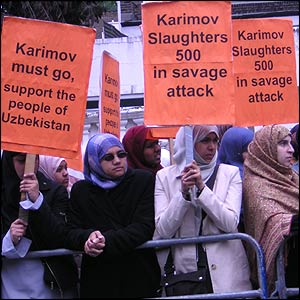
 JNN Jan 14 2011 : Muslims are facing a dark future of repression and torture in Uzbekistan for years to come as the government’s relentless campaign of religious suppression continues. Continue reading
Category Archives: Asia Pacific
Muslims Offer Prayers at the Site of Demolished Delhi Mosque
JNN 14 Jan 2011 Delhi : After a few hours of normalcy Thursday, a crowd of over 100 men and women gathered at the site of a mosque in south Delhi that was demolished as an illegal structure a day earlier. They offered prayers and shouted slogans against the authorities. Continue reading
Afghan girls raped and killed by US troops
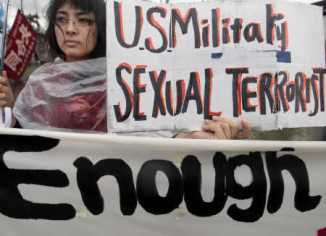 JNN 13 Jan 2011 : The daughter of an Afghan politician has reportedly died of her injuries after being raped by American soldiers stationed in Afghanistan’s southwestern province of Farah. Continue reading
 China’s forex reserves show record leap
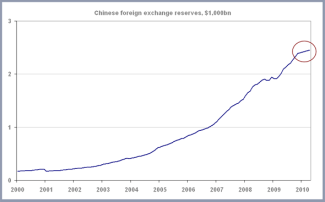 JNN 10 Jan 2011 : China’s foreign exchange reserves jumped by a record $199bn in the last quarter of 2010, taking the total to $2,850bn and underlining the continuing imbalances in the global economy. Continue reading
US soldier to face court-martial in Afghan Civilians killing
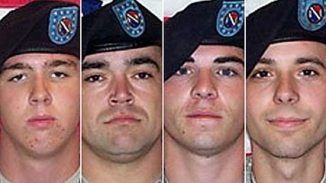 JNN 08 Jan 2011 SEATTLE: A US Army staff sergeant was ordered on Friday to be tried by a military court to face charges that include murdering three unarmed Afghan civilians, keeping body parts as grisly war trophies and beating a whistle-blower who told superiors about widespread hashish use in his unit.
 Staff Sergeant Calvin Gibbs, 25, is one of five soldiers from the Stryker Brigade charged with murder. Twelve soldiers in all face charges in the most serious prosecutions of alleged war atrocities by US military deployed in Afghanistan since the war began in 2001.
JNN has learned the Army is also re-examining a 2004 shooting that involved Gibbs in Iraq in which three members of a family were killed.
After his May 11 arrest in Afghanistan, Gibbs showed investigators a tattoo on his lower left leg depicting crossed pistols and six skulls. He told investigators the skulls were a way to keep track of his kills in both Iraq and Afghanistan, according to investigative interview notes shown to JNN.
And a soldier under his command told investigators Gibbs “associates with skinheads online,” the investigative notes show. The soldier, who is not charged, told investigators the skinheads “are worse than most gang members I have ever met.”
Gibbs, of Billings, Montana, was ordered to stand trial by Major General Curtis Scaparrotti, commanding officer of Joint Base Lewis-McChord. No date was set.
The Stryker Brigade cases, with some 4,000 photographs sealed from public view including some reportedly of soldiers posing with Afghan casualties, have drawn comparisons to the inflammatory Abu Ghraib prison scandal in Iraq in 2004.
According to investigative documents made available to JNN, Gibbs collected human fingers from his victims. Also, the Army has accused members of Gibbs’ platoon of possessing photographs of victims.
And JNN has learned the Army is now re-examining Gibbs’ record in Iraq, where he was involved in the killing of an Iraqi family in the summer of 2004.
Gibbs faces a maximum penalty of life imprisonment without parole for charges that include premeditated murder in the deaths of three unarmed Afghan civilians, including a cleric, in the Afghan villages of La Muhammad Kalay in January 2010, Khari Kleyl in February 2010 and Qualaday in May 2010, according to court documents.
Gibbs allegedly kept fingers, severed with medical shears, and displayed them at platoon mates to intimidate them.
He faces a dozen other charges that include keeping body parts such as teeth, finger and leg bones as war trophies.
The cases began as an investigation into hashish use by members of what was then known as the 5th Stryker Brigade, but grew into a probe of what prosecutors described as an infantry unit run amok.
Phillip Stackhouse, a civilian attorney defending Gibbs, has described Gibbs’ involvement as legitimate combat killings, He was not immediately available for comment on the order.
Halal Food and Goods Demand Open New Opportunities for People in Western Countries
 JNN 29 Dec 2010 : In the ballroom of an upscale hotel a short train ride from New York, advertisers, food industry executives and market researchers mingled — the men in dark suits, the women in headscarves and Western dress. Chocolates made according to Islamic dietary laws were placed at each table.
The setting was the American Muslim Consumer Conference, which aimed to promote Muslims as a new market segment for U.S. companies. While corporations have long catered to Muslim communities in Europe, businesses have only tentatively started to follow suit in the U.S. — and they are doing so at a time of intensified anti-Muslim feeling that companies worry could hurt them, too. American Muslims seeking more acknowledgment in the marketplace argue that businesses have more to gain than lose by reaching out to the community.
“We are not saying, ‘Support us,'” said Faisal Masood, a graduate of the University of Illinois, Chicago, and management consultant. “But we want them to understand what our values are.”
There are signs the industry is stirring: Faisal Masood, a Wall Street executive who organized the gathering, had attracted only 200 or so attendees when he started the event last year. This year, he had to close registration at 400 to keep from going over capacity.
 The worldwide market for Islamically permitted goods, called halal, has grown to more than half a billion dollars annually. Ritually slaughtered meat is a mainstay, but the halal industry is much broader, including foods and seasoning that omit alcohol, pork products and other forbidden ingredients, along with cosmetics, finance and clothing.
Corporations have been courting immigrant Muslim communities in Europe for several years. Nestle, for example, has about 20 factories in Europe with halal-certified production lines and advertises to Western Muslims through its marketing campaign called “Taste of Home.” Nestle plans to increase its ethnic and halal offerings in Europe in coming years.
In the United States, iconic American companies such as McDonald’s (which already has a popular halal menu overseas) and Wal-Mart have entered the halal arena. In August, the natural grocery giant Whole Foods began selling its first nationally distributed halal food product — frozen Indian entrees called Saffron Road.
Abdalhamid Evans, project director with the World Halal Forum Europe, which works with the global halal industry, said a recent backlash has prompted some mainstream businesses in Europe to keep a lower profile about their halal products or scale back their offerings.
In the U.K., after Kentucky Fried Chicken rolled out halal menu options in several dozen stores, the restaurant chain pulled the items in a few locations in the face of protests.
Last September, the Daily Mail of London reported that many British supermarkets, fast-food chains, hospitals, schools, pubs and sporting arenas such as Wembley Stadium, were serving some halal meat and poultry without notifying the public. A large share of meat sold in Britain comes from New Zealand, where the slaughterhouses have expanded halal production as they try to boost their already robust exports to Islamic countries.
U.S. companies have also faced some resistance, although on a smaller scale.
Last year, Best Buy Inc. was inundated with calls, e-mails and letters complaining that the company was anti-American after acknowledging a Muslim holiday — “Eid al-Adha,” or the Feast of the Sacrifice — for the first time in a national advertisement. That year, Eid al-Adha fell around Thanksgiving, so the ad, a small bubble at the bottom of the page, appeared in the company’s Thanksgiving flier. Critics seized on the timing in their complaints.
“They used very abusive language,” said Nausheena Hussain, a marketing manager for Best Buy in Minnesota. “It was pretty sad.”
Best Buy executives stood by their decision. The company saw the holiday greeting as part of a larger goal of reaching consumers from different cultures. Soon, Muslims started calling to thank Best Buy and set up a Facebook page honoring the company, which continues to acknowledge Muslim holidays.
“It’s a very viable customer segment,” said Zainab Ali, senior marketing manager with the money transfer company MoneyGram, which ran a special Ramadan promotion this year for Muslims in the U.S., Europe and elsewhere. “You just need to get over some of the fear and look at them as just another consumer.”
The potential for profit is drawing more companies to the idea.
This year, Ogilvy & Mather, the global advertising firm, started an international Islamic branding consultancy called Ogilvy Noor that includes an emphasis on U.S. Muslims. (“Noor” means “light” in Arabic.) Muslims came to the United States in large numbers for doctorates, engineering and medical degrees, after the federal government eased immigration quotas in the 1960s. Studies have found that a significant percentage of Muslims are better educated and wealthier than other Americans.
Joohi Tahir, vice president of marketing and sales for Crescent Foods, the halal chicken producers based in Chicago, said Wal-Mart executives approached Crescent Foods two years ago looking for a halal chicken supplier, then invited Crescent executives to Wal-Mart headquarters in Arkansas to advise them on reaching Muslim consumers.
That same year, Wal-Mart opened a supercenter in Dearborn, Mich., an area with one of the largest Muslim and Arab populations in the country. The store is geared for Mideast consumers, with a range of halal products, including specialty foods.
“Mainstream is coming to halal,” Tahir said.
Wal-Mart spokesman Bill Wertz said the merchandise in each store can vary according to the needs of the surrounding community, so it is difficult to know the exact number of U.S. stores that carry halal products. But several in Michigan and at least one store in Canada have advertised that they offer some halal items.
Manufacturers entering the field hope they can appeal to non-Muslims as well.
Jack Acree, executive vice president of American Halal Co., which produces the Saffron Road products, emphasizes that the entrees are not only halal, but also all-natural and humanely farmed, and free of antibiotics and hormones.
“Muslims are highly educated and live in metro areas, and they’re shopping with us already,” said Errol Schweizer, senior global grocery coordinator for Whole Foods. “If we have a customer base where there’s a big Muslim population, it makes sense for us to service that population.”
Schweizer would not answer directly when asked if anyone complained to the company over its Muslim outreach. He said only that halal foods will be judged like any other products — by whether the items sell.
Despite the sometimes unfriendly climate for Muslims, Evans, of the World Halal Forum, said it is inevitable that a large number of businesses will reach out Muslim consumers, given the wealth and size of the Muslim population — more than a billion people worldwide — and their presence in the West.
“It isn’t a question of whether they’re going to do it,” Evans said. “It’s a question of where and when and how.”
Malaysia Shiites Protest at Discrimination and Arrests
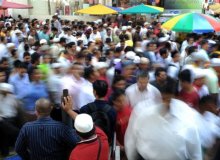 JNN 28 Dec 2010 : A Malaysian Shiite leader Tuesday protested at discrimination against the sect’s followers after the detention of 200 members by religious officials who claim they breached local Islamic laws.
Shiite community leader Kamil Zuhairi Abdul Aziz said the group had submitted a protest letter to the national human rights commission (Suhakam) after a recent raid of their prayer hall by state religious officers.
“The officers broke into and damaged our prayer hall which is private property and where we were having special prayers for the Prophet Mohammed’s grandchildren,” he said.
“If other communities like Hindus, Buddhists, Christians, Sikhs and others have their right to worship and practise under the constitution then why not us,” Kamil Zuhairi added.
“We were condemned, criticised, slandered and threatened in local media just because we practise what had been preached by our ancestors who were Shiites and have lived in Malaysia for centuries.”
Kamil Zuhairi said there were about 40,000 Shiite followers in Malaysia but most practised their faith behind closed doors for fear of being stigmatised and targeted by the authorities.
A state Islamic religious department official, who declined to be named, said the detainees, who include Pakistanis, Iranians and Indonesians, had been released on bail.
He said investigations were still ongoing and that the group could be charged for not following Sunni Islam, considered the only legal sect of Islam in Malaysia.
Shiites make up around 15 percent of Muslims worldwide. They represent the majority populations in Iraq, Iran and Bahrain and form significant communities in Afghanistan, Lebanon, Pakistan and Saudi Arabia.
Shiites believe the Prophet Mohammed should have been succeeded by his cousin Imam Ali (A.S) rather than his companion Abu Bakr. Traditional Sunnis believe any suggestion that Abu Bakr was a usurper is tantamount to blasphemy.
The Shiites are one of several Islamic sects under close watch by Malaysian religious authorities, which crack down hard on so-called deviant groups that deviate from orthodox teachings.
Related Articles
Days of 'Dollar's dominance are counted now
JNN 23 Dec 2010 : Business analysts indicate that the US dollar’s status as the world’s reserve currency and the standard currency could be soon coming to an end.
This comes days after China and Russia decided to renounce the US dollar and resort to using their own currencies for bilateral trade.
“About trade settlement, we have decided to use our own currencies,” China Daily quoted Russian Premier Vladimir Putin as saying in a joint news conference with his Chinese counterpart Wen Jiabao in St. Petersburg on Tuesday.
The developments come as the two countries are accustomed to using the dollar and other Western currencies for bilateral trade. But the yuan has now started trading against the Russian ruble in the Chinese interbank market.
China has also announced it will continue to allow more currencies to trade in the domestic interbank foreign-exchange market in the coming weeks.
In addition, BusinessWeek has said in a recent report that Moscow and Beijing have also called for the dollar’s role in the financial system to be diluted.
The decision comes days after China blasted a US decision to inject hundreds of billions of dollars into the US banking system.
Chinese Vice Finance Minister Zhu Guangyao said Washington was ignoring its responsibility to support emerging economies.
“The US has not fully taken into consideration the shock of excessive capital flows to the financial stability of emerging markets,” Zhu told reporters in Beijing in early November.
The US Federal Reserve has announced plans to pump USD 600 billion into its economy by the end of June 2011.
This is while China has continued to resist pressures from the US to raise the value of its yuan currency against the US dollar. Senior officials in Beijing say China will firmly stick to its own path for reforming the yuan.
The currency debate has intensified tension between the US and China. Washington says China holds the yuan low so that Chinese goods can enjoy an artificial competitive edge.
Relations between Beijing and Washington have been deteriorating over a number of issues, including the Pentagon arms sales to Taiwan.
Days of ‘Dollar’s dominance are counted now
JNN 23 Dec 2010 : Business analysts indicate that the US dollar’s status as the world’s reserve currency and the standard currency could be soon coming to an end.
This comes days after China and Russia decided to renounce the US dollar and resort to using their own currencies for bilateral trade.
“About trade settlement, we have decided to use our own currencies,” China Daily quoted Russian Premier Vladimir Putin as saying in a joint news conference with his Chinese counterpart Wen Jiabao in St. Petersburg on Tuesday.
The developments come as the two countries are accustomed to using the dollar and other Western currencies for bilateral trade. But the yuan has now started trading against the Russian ruble in the Chinese interbank market.
China has also announced it will continue to allow more currencies to trade in the domestic interbank foreign-exchange market in the coming weeks.
In addition, BusinessWeek has said in a recent report that Moscow and Beijing have also called for the dollar’s role in the financial system to be diluted.
The decision comes days after China blasted a US decision to inject hundreds of billions of dollars into the US banking system.
Chinese Vice Finance Minister Zhu Guangyao said Washington was ignoring its responsibility to support emerging economies.
“The US has not fully taken into consideration the shock of excessive capital flows to the financial stability of emerging markets,” Zhu told reporters in Beijing in early November.
The US Federal Reserve has announced plans to pump USD 600 billion into its economy by the end of June 2011.
This is while China has continued to resist pressures from the US to raise the value of its yuan currency against the US dollar. Senior officials in Beijing say China will firmly stick to its own path for reforming the yuan.
The currency debate has intensified tension between the US and China. Washington says China holds the yuan low so that Chinese goods can enjoy an artificial competitive edge.
Relations between Beijing and Washington have been deteriorating over a number of issues, including the Pentagon arms sales to Taiwan.
Anti-US governor wins Okinawa poll
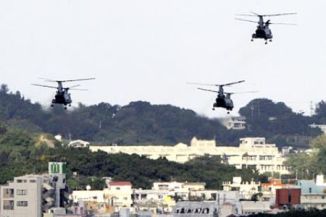 JNN 23 Dec 2010 : The Japanese on the southern Island of Okinawa have re-elected incumbent governor Hirokazu Nakaima, who wants an end to the American military presence.
Nakaima, who wants the US base off Okinawa altogether, beat his opponent who agreed to relocate the base to a less crowded area on the island.
In May, Tokyo and Washington agreed to implement a 2006 plan to relocate the Futenma airbase to a less crowded area in Okinawa.
The move infuriated local residents, who view the base as a source of noise, pollution and serious crime –including rape.
Futenma hosts about half the US troops in Japan and the row over this airbase has been giving new headaches to Japan’s Prime Minister Naoto Kan.
The development comes after his Democratic Party lost an upper house election in August.
Kan’s predecessor Yukio Hatoyama had to resign after he failed to keep his election campaign promise to remove the base off Okinawa.
Futenma has provoked a wave of anger in the country, with the nation demanding a complete removal of the airbase, which has been under US command since the end of World War II, off Okinawa.
Japanese people have been urging their government to remove US military installations from the country altogether.
Tens of thousands of people have held several rallies against the American military engagement in the country over the past months.
China exports, imports hit record highs
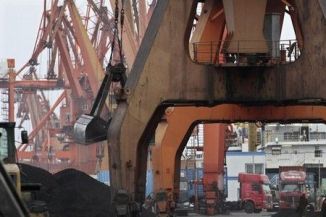 JNN 14 Dec 2010 : Chinese customs authorities have officially announced that the country’s rate of exports and imports hit record highs last month.
Exports increased 34.9 percent in November from a year earlier to 153.3 billion dollars, while imports also rose 37.7 percent to 130.4 billion dollars.
The increases trounced analyst forecasts for 22.4 percent growth, while the values were record highs for a single month, the customs authorities said.
Analysts said the data showed the Chinese economy remained in good shape despite sluggish growth in the United States and the worsening European debt crisis.
“It is increasingly difficult to argue that China’s export sector cannot tolerate some currency appreciation, a move which would also help Beijing get price pressures under control,” Brian Jackson of Royal Bank of Canada said.
“The strength of domestic demand also suggests that rate hikes are needed to keep China’s economy on an even keel,” Jackson was quoted as saying by AFP on Friday.
The data comes ahead of the release of key economic figures for November on Saturday, including inflation, and as top leaders meet for the annual Central Economic Work Conference to discuss policies for the next year.
Protests over US-S Korea trade deal
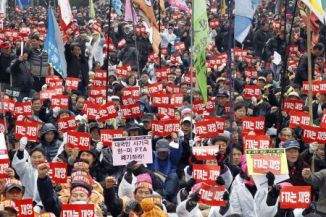 JNN 09 Dec 2010 : Thousands of South Korean farmers have protested against a free trade deal with the United States, demanding that the government scrap the agreement.
Some 2,000 farmers wearing red headbands staged a rally against Seoul and Washington’s Free Trade Agreement on Wednesday.
The protestors burned a rice sack and chanted anti-US slogans at the rally in Seoul.
South Korean farmers have expressed fear that the deal would harm agricultural producers as well as cattle raisers in the country.
The angry protestors called on the South Korean government to abolish the deal and send surplus rice to North Korea to help increase the price of rice.
“We have suffered from the low price of rice since last summer. The government should solve the problem and abolish the FTA (Free Trade Agreement) they agreed with this time (with the US),” Reuters quoted Lim Bong-jae, a protest leader, as saying.
Following a three-year impasse, Seoul and Washington reached a tentative free-trade agreement early in December.
If ratified by US Congress and the South Korean Parliament, the agreement would eliminate tariffs on over 95 percent of industrial and consumer goods within five years.
‘Russia claims its power , It disrupts US-Japan war games’
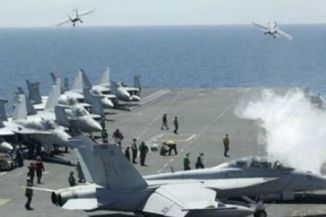 JNN 09 Dec 2010 : Russian jet fighters flying over the Sea of Japan have reportedly forced the US and Japanese military to halt their ongoing joint war games in the region.
According to Japanese officials, the incident took place on Monday when the US and Japanese fighter jets staged dogfight drills over the Sea of Japan.
“It is a fact that as part of the continuing Japan-US joint exercises, there was training taking place in the Sea of Japan on the sixth of this month,” Japanese government spokesman Yoshito Sengoku was quoted as saying by state-run BBC.
Russian authorities confirmed that the jets were flying above the Sea near the drills site.
“The aircraft carried out a planned flight in an area of the Russian Pacific Fleet’s regular activity,” a Russian military spokesman, Roman Markov, said.
“Our pilots did not violate any rules of international airspace.”
Moscow and Tokyo have recently locked horns over a disputed island chain they both claim.
The archipelago of some 56 islands, which are home to about 19,000 people, has been controlled by Moscow since it was seized by Soviet troops in 1945.
The incident comes as the top US and South Korean military officials have announced plans to hold more joint military exercises.
US Admiral Mike Mullen and South Korea’s General Han Min-koo held talks on the Korean peninsula in Seoul on Wednesday.
Both military officials described North Korea’s recent attack on Yeonpyeong Island as deliberate and illegal. During the meeting, Mullen gave reassurances of Washington’s commitment to defend South Korea.
Tensions are high on the Korean peninsula after last month’s deadly clash between South and North Korean forces along the Koreas’ disputed sea borders.
The fighting left four South Koreans dead with each side blaming the other for initiating the fighting.
North Korea has warned that the war games could bring the Koreas closer to the brink of war.
Pyongyang accuses US President Barack Obama of plotting with regional allies to topple the country’s government, insisting that its nuclear program is a deterrent against US forces in the region.
'Russia claims its power , It disrupts US-Japan war games'
JNN 09 Dec 2010 : Russian jet fighters flying over the Sea of Japan have reportedly forced the US and Japanese military to halt their ongoing joint war games in the region.
According to Japanese officials, the incident took place on Monday when the US and Japanese fighter jets staged dogfight drills over the Sea of Japan.
“It is a fact that as part of the continuing Japan-US joint exercises, there was training taking place in the Sea of Japan on the sixth of this month,” Japanese government spokesman Yoshito Sengoku was quoted as saying by state-run BBC.
Russian authorities confirmed that the jets were flying above the Sea near the drills site.
“The aircraft carried out a planned flight in an area of the Russian Pacific Fleet’s regular activity,” a Russian military spokesman, Roman Markov, said.
“Our pilots did not violate any rules of international airspace.”
Moscow and Tokyo have recently locked horns over a disputed island chain they both claim.
The archipelago of some 56 islands, which are home to about 19,000 people, has been controlled by Moscow since it was seized by Soviet troops in 1945.
The incident comes as the top US and South Korean military officials have announced plans to hold more joint military exercises.
US Admiral Mike Mullen and South Korea’s General Han Min-koo held talks on the Korean peninsula in Seoul on Wednesday.
Both military officials described North Korea’s recent attack on Yeonpyeong Island as deliberate and illegal. During the meeting, Mullen gave reassurances of Washington’s commitment to defend South Korea.
Tensions are high on the Korean peninsula after last month’s deadly clash between South and North Korean forces along the Koreas’ disputed sea borders.
The fighting left four South Koreans dead with each side blaming the other for initiating the fighting.
North Korea has warned that the war games could bring the Koreas closer to the brink of war.
Pyongyang accuses US President Barack Obama of plotting with regional allies to topple the country’s government, insisting that its nuclear program is a deterrent against US forces in the region.
‘China to become world’s 1st innovator’
 JNN 06 Dec 2010 : A recent survey shows that Chinese people have a strong sense of optimism and that the country will overtake the US and Japan in innovations by the year 2020.
The poll, conducted by drugmaker AstraZeneca across Britain, the US, Sweden, Japan, India and China, found that the Chinese and the Indians had a growing sense of optimism while people of the developed Western countries showed relative pessimism.
More than half of the participants in China and India said their countries would be the world’s most innovative by 2020, while only one in 20 Britons believed the UK capable of such an achievement.
Asians voted for communications and computing to trigger the most number of innovations, while American and European respondents gave the credit to the invention of vaccines and antibiotics.
China is currently the world’s second-largest economy and biggest manufacturer, Reuters reported.
Based the poll’s results, the United States ranks the world’s most innovative country followed by Japan and China.
Some 27 percent of the 6,000 participants said China will be the number one country in innovations in the next ten years, followed by India with 17 percent, the United States 14 percent and Japan 12 percent.
Experts say China’s success has nothing to do with the United States having less interest in science and technology, but is due to China and India’s doing more.
A report released last month by Thomson Reuters said Europe and Asia were catching up with the US in dominating the world of scientific research.
The study showed that China was now the second-largest producer of scientific papers after the US with nearly 11 percent of the world’s total.
'China to become world's 1st innovator'
JNN 06 Dec 2010 : A recent survey shows that Chinese people have a strong sense of optimism and that the country will overtake the US and Japan in innovations by the year 2020.
The poll, conducted by drugmaker AstraZeneca across Britain, the US, Sweden, Japan, India and China, found that the Chinese and the Indians had a growing sense of optimism while people of the developed Western countries showed relative pessimism.
More than half of the participants in China and India said their countries would be the world’s most innovative by 2020, while only one in 20 Britons believed the UK capable of such an achievement.
Asians voted for communications and computing to trigger the most number of innovations, while American and European respondents gave the credit to the invention of vaccines and antibiotics.
China is currently the world’s second-largest economy and biggest manufacturer, Reuters reported.
Based the poll’s results, the United States ranks the world’s most innovative country followed by Japan and China.
Some 27 percent of the 6,000 participants said China will be the number one country in innovations in the next ten years, followed by India with 17 percent, the United States 14 percent and Japan 12 percent.
Experts say China’s success has nothing to do with the United States having less interest in science and technology, but is due to China and India’s doing more.
A report released last month by Thomson Reuters said Europe and Asia were catching up with the US in dominating the world of scientific research.
The study showed that China was now the second-largest producer of scientific papers after the US with nearly 11 percent of the world’s total.
Khadijah Kobra (SA) Satellite TV Launched


JNN 05 Dec 2010 : A satellite network titled “Khadijah Kobra (SA)” in Urdu language was launched during a special ceremony in Abu-Torab-Khan District in India.
the network was inaugurated by Hojat-ol-Islam Seyyed Mohammad Al-Razavi on December 1concurrent with the Day of Mobaheleh.
The recitation of Hadith-e Kassa by Seyyed Mohammad Ghafer, prominent professor of Nazemiah University, was among the programs of the opening ceremony.
Also, head of the network referred in his speech to some of the activities of the media as reviving the Shiite culture in India as well as broadcasting Islamic educational serials and mourning ceremonies held in old districts belonging to Shias.
Present at the opening ceremony were Seyyed Ghaem Mahdi, a retired official from Ettela’at (Information) Center in India, as well as a number of staff form Eslaah (Reformation) Journal Office.
Sex-tainted Canadian commander quits

JNN 28 Nov 2010 : A Canadian Army general facing court martial over an alleged sexual affair with a female subordinate has tendered his resignation.
The 26-year veteran voluntarily gave his notice on November 17, Canadian Forces spokesman Commander Hubert Genest said about Brigadier General Daniel Menard who is accused of having had a sexual affair with Master Corporal Bianka Langlois.
“He now wishes to focus on his family,” the National Post quoted Cmdr. Genest as saying on Friday.
Menard was relieved of his duties as project leader for the Military Personnel Management Capability Transformation Project shortly after, he added.
In May, Menard, a former commander in Afghanistan, was abruptly pulled from Kandahar where he served as task force commander.
Langlois was convicted in summary trial on September 28 on one count of conduct to the prejudice of good order and discipline and was reprimanded and fined 693 US dollars.
No date has yet been set for Menard’s trial. He will be leaving the Canadian Army on December 17.
According to Canadian officials, the decision will not affect his court martial on two counts of conduct to the prejudice of good order and discipline and four counts of obstructing justice offences punishable by up to 10 years in prison and disgraceful dismissal from the military.
Ghadeer Celebrations at Zainabia Imambargah , Bombay
 JNN 28 Nov 2010 Mumbai : There was a Grand Celebration of Ghadeer Anniversary last night at Zainabia Imambargah.
The local and outsation poets were at their best. Javed Gopalpuri from Bihar earned tremendous appreciation from the audience and was forced to repeat his magical style of recitation and high quality of poetry.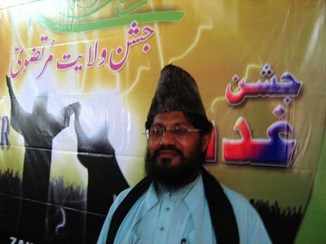
Sarwar Nawab from Lucknow, Razi Biswani from Jaunpur, Khursheed Muzaffar Nagri, Nayab Balyawi and others uplifted the sensational atmosphere of this poetic feat. Dr. Shaoor Aazmi was conferred an Award in memory of late S.Ghulam Hasnain Kararvi for his contribution to Urdu literature.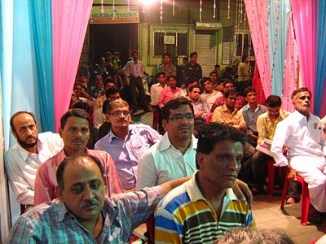
Mashhood Danapuri, Khurshid Hallauri, Mahdi Aazmi and others were the darling of the crowd. Compering of the function by Naseer Aazmi was at its best. Maulana Hasnain Kararvi set the tone of the programme by his electrifying speech on Ghadeer, highlighting the final Hajj of the Holy Prophet of Islam (s.a.).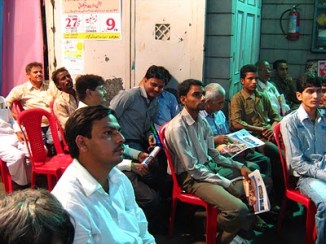
This grand function opened up with the recitation of the Holy Qur’an by Tusi Rizvi.
The occasion was right enough to launch Urdu weekly “Hamara Waqt” by the hands of Maulana Hasnain Kararvi. Mr. Ali Abbas is the editor of this weekly.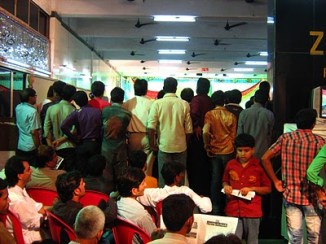
The Wilayati crowd enjoyed the evening so much that It all ended at 6.00 AM.
Below are some of the photographs of the Ghadeer function.
Kabul blames UK for Taliban imposter
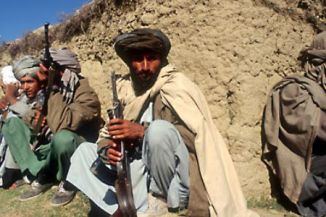 JNN 26 Nov 2010 : Afghan President Hamid Karzai’s chief of staff says British diplomats brought a fake Taliban commander to sensitive government meetings.
Mohammad Umer Daudzai made remarks in an interview with The Washington Post on Thursday.
“The last lesson we draw from this: International partners should not get excited so quickly with those kind of things.”
The imposter tried to impersonate Taliban commander Mullah Mansour. He disappeared after an employee who knew the real Mansour raised the alarm.
The imposter is said to have met with Afghan officials three times and flown on a NATO aircraft to Kabul.
It appears that he was paid hundreds of thousands of dollars to take on the role. British officials say the money came from the Afghan government not the UK.
But the British newspaper The Times says the imposter was planted by the UK’s MI6 overseas spying agency.
An unnamed US official has also told Washington post that the Mansour impersonator was the Brit’s Guy.
Karzai recently formed a peace council to lead talks with the Taliban, electing Afghanistan’s former President Burhanuddin Rabbani as chairman of the council.
The newly-established peace council has been making efforts to initiate dialogue with discontented Afghans and militants who have engaged in warfare with the government.
The council has expressed willingness to listen to legitimate demands by the militants.
The development comes after senior officials in the UK floated the idea of making peace with the Taliban whose uprooting was one of the main objectives of the 2001 US-led invasion.
The US-led invasion was launched with the official objective of curbing militancy and bringing peace and stability to the war-ravaged country.
Anti-war groups have highlighted the fact that Afghanistan remains unstable nine years after the invasion.
The Taliban have repeatedly rejected peace talks, calling for the withdrawal of US-led foreign forces from Afghanistan.
If you are a poor Shia Muslim, pray you don’t die in Lucknow
 JNN 23 Nov 2010 Lucknow : Skyrocketing land prices have not only made dwelling for the living difficult but even the dead ones are facing the pinch of spiraling rates in Lucknow. Prices for a grave in any Shia graveyard may ranges anywhere between Rs one thousand to one lakh.
A group of Shia Muslims raised the issue during a dharna at Shaheed Smarak in Lucknow on Monday. The protestors demanded that prices of graves should be reduced and the poor should be provided land for grave free of cost. “It is pathetic that graves are beyond the approach of common man in Lucknow. Getting land in any karbala or qabristan in Lucknow will cost around Rs 50,000-60,000,” said Syed Naseer Hussain Rizvi, whose organisation Idara-e-Sakina staged dharna against the practice on Monday.
Shia Muslims have nine graveyards and Karbalas in Lucknow where they bury their dead. The major ones are Ghuframaab Ka Imambara, Imambara Agha Baqar, Talkatora Karbala, Malka Jahan Ka Karbala, Abbas Bagh Ka Karbala, Imdad Hussain Ka Karabala and three others. All these are under the control of Shia Central Board of Waqfs which appoints mutawalli for managing the daily affairs. Among them Ghuframaab Ka Imambara situated at Chowk crossing is the most sought one among Shias for burying their dead ones. The scramble thus has also resulted in high prices of graves in the Imambara. “It is hard to get a grave there in Ghuframmab Imambara. One has to shell more than Rs 50,000 for the land. It is thus beyond the reach of common Shias,” said Naseer.
The spiralling prices also have given rise to another custom of advance booking of graves. Known as Hayati Qabr these graves are reserved for the persons who have purchased them. The space remains vacant waiting for his death and to be buried.
The organisation Idara-e-Sakina, which has waged a battle against the high prices of graves in Lucknow, began their movement in 2009. A demonstration was held on December 28, 2009 in Lucknow. However, things cooled down after the District Magistrate (DM) assured that suitable action will be taken in this regard. Even the prominent Shia clerics also came forward and denounced the black marketing of graves. They also demanded that there should be a nominal charge for the graves and the poor ones should be given the facility free for a decent burial.
“A year has passed but nothing has materialised. This issue is of great importance and we will not hesitate to stage violent protest for this cause,” said Naseer.
Meanwhile, commenting on the issue, general secretary, All India Shia Personal Law Board (AISPLB) Maulana Yasoob Abbas termed the development as unfortunate and against the values of religion. “It is against Islam to sell land for graves at such a high prices. The poor has nowhere to go as he cannot afford such an exorbitant price for the grave. We have enough graveyards to meet the population’s demand but they have been turned into business venture which is pathetic,” said Abbas
Lucknow : Shia Waqf Board Chairman resigns, crisis deepens
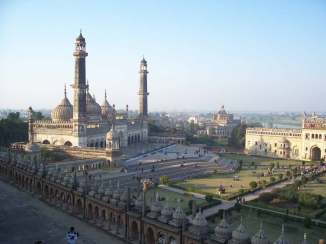 JNN 23 Nov 2010 Lucknow : Chairman of Shia Central Board of Waqf (SCBW), Kamaluddin Akbar, along with a member of the board, resigned on Monday. Officials of the board confirmed that they have received the resignation letters.
As per reports, Akbar, who was perturbed over mudslinging by some members of the board, submitted his papers through courier to the state government. Another member former Principal Secretary (Law) Mazhar Abbas Abedi too has resigned from his post. After having received the resignation, officials in the state government called up Akbar to confirm his decision. It is reported that he admitted that he has resigned from his post. However, the state government is yet to take a final decision over his resignation. “We have received the resignation but it has not been accepted. Decision in this regard will be taken by state government,” said Administrative Officer of the board, Ghulam Sayyedain.
The SCBW since its reconstitution has been in a state of turmoil. Two members of the board, Kunwar Iqbal Haider and Imran Rizvi launched scathing attack on the newly appointed chairman Akbar accusing him of misuse of waqf land. Several demonstrations were held in the city over the construction of a nursing home on a waqf land belonging to Ghuframaab Imambara in Chowk, Lucknow. Akbar, who is reported to be related to prominent Shia cleric and Imam-e-Juma, Maulana Kalbe Jawwad failed to pacify the members who were up in arms against him.
Meanwhile, it is reported that Akbar will be meeting senior Indian government cabinet minister Naseemuddin Siddiqui over the fate of his resignation.
'US held talks with fake Taliban head'
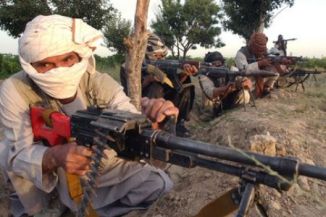 JNN 23 Nov 2010 Senior Afghan and US officials have confirmed reports of a series of secret peace talks with a fake Taliban leader in Kabul over the past months, a media report says.
According to the New York Times, secret talks between officials and a senior Taliban commander collapsed after Washington concluded they were dealing with an impostor.
The secret high profile talks with Mulla Akhtar Muhammad Mansour — a senior commander of the Taliban — were intended to end the nine-year long war.
However, the man was apparently not Mansour at all.
Western officials intimately involved in the discussions say the negotiator was not even a member of the Taliban leadership.
“It’s not him,” a Western diplomat in Kabul said. “And we gave him a lot of money.”
NATO and Afghan officials say they held three meetings with the man, who had traveled to Afghanistan from neighboring Pakistan.
Based on the report, the fake Taliban leader even met with Afghan President Hamid Karzai at the presidential palace in Kabul.
The report comes as a US delegation has reportedly arrived in Pakistan to hold a secret meeting with pro-Taliban figures.
The meetings are said to be aimed at pushing for talks between Taliban militants and the Afghan government.
The developments come after Karzai called on tribal elders and civic representatives to get together and discuss measures for a national reconciliation.
Karzai recently formed a peace council to lead talks with the Taliban, electing Afghanistan’s former president Burhanuddin Rabbani as chairman of the council.
The newly-established peace council has been making efforts to initiate dialogue with discontented Afghans and militants who have engaged in warfare with the government.
The council has expressed willingness to listen to legitimate demands by the militants.
The development comes after senior officials in the UK floated the idea of making peace with the Taliban whose uprooting was one of the main objectives of the 2001 Us-led invasion.
The US-led invasion was launched with the official objective of curbing militancy and bringing peace and stability to the war-ravaged country.
Anti-war groups have highlighted the fact that Afghanistan remains unstable nine years after the invasion.
The Taliban have repeatedly rejected peace talks, calling for the withdrawal of US-led foreign forces from Afghanistan
‘US held talks with fake Taliban head’
JNN 23 Nov 2010 Senior Afghan and US officials have confirmed reports of a series of secret peace talks with a fake Taliban leader in Kabul over the past months, a media report says.According to the New York Times, secret talks between officials and a senior Taliban commander collapsed after Washington concluded they were dealing with an impostor.
The secret high profile talks with Mulla Akhtar Muhammad Mansour — a senior commander of the Taliban — were intended to end the nine-year long war.
However, the man was apparently not Mansour at all.
Western officials intimately involved in the discussions say the negotiator was not even a member of the Taliban leadership.
“It’s not him,” a Western diplomat in Kabul said. “And we gave him a lot of money.”
NATO and Afghan officials say they held three meetings with the man, who had traveled to Afghanistan from neighboring Pakistan.
Based on the report, the fake Taliban leader even met with Afghan President Hamid Karzai at the presidential palace in Kabul.
The report comes as a US delegation has reportedly arrived in Pakistan to hold a secret meeting with pro-Taliban figures.
The meetings are said to be aimed at pushing for talks between Taliban militants and the Afghan government.
The developments come after Karzai called on tribal elders and civic representatives to get together and discuss measures for a national reconciliation.
Karzai recently formed a peace council to lead talks with the Taliban, electing Afghanistan’s former president Burhanuddin Rabbani as chairman of the council.
The newly-established peace council has been making efforts to initiate dialogue with discontented Afghans and militants who have engaged in warfare with the government.
The council has expressed willingness to listen to legitimate demands by the militants.
The development comes after senior officials in the UK floated the idea of making peace with the Taliban whose uprooting was one of the main objectives of the 2001 Us-led invasion.
The US-led invasion was launched with the official objective of curbing militancy and bringing peace and stability to the war-ravaged country.
Anti-war groups have highlighted the fact that Afghanistan remains unstable nine years after the invasion.
The Taliban have repeatedly rejected peace talks, calling for the withdrawal of US-led foreign forces from Afghanistan
Indian Shia Muslims Asks clerics to Draw a Peace Plan to avert any Violence in the Upcoming Muharam
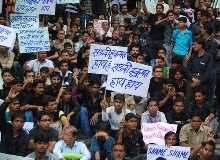 JNN 19 Nov 2010 Lucknow : Several Shia organisations in a meeting on Thursday appealed to Muslim clerics for maintaining peace during the upcoming Muharram. The organisations also denounced the pressure building tactics by some Muslim clerics for transfer of some officials.
“The clerics must think twice about their act of mounting pressure in the name of Muharram processions on the state government. Their move is nothing more than a face saving situation,” said Shia community leader Ghazanfar Agha on Thursday. The organizations decried the violent protest on November 13 by some Shia youths after the arrest of Maulana Kalbe Jawwad in an issue involving supremacy over Shia PG College. “Maulana Jawwad should distance himself from such elements who indulged in violence. This is not Lucknow’s tehzeeb. Tearing government hoardings, slogan shouting against Chief Minister, attacking petrol pump and poor vendors is not justified. One cannot also place any demand in the backdrop of such violence,” said Agha.
Decrying Jawwad’s supporter, he remarked that Shia community is already backward and it will lead to further alienation. “Instead of wasting their energy they should sit together and help in peaceful Muharram. There are other issues such as sprucing up civic amenities during Muharram should be taken up in right earnest,” he added. The major organisations which attended the meeting held at Katra Abu Turab Khan included Al Asr Foundation, All India Shia Unity Council, Tanzeem-e-Shianey Haiderey Karar, Shia Young Society, Abu Talib MIssion, Imam-e-Hasan Academy, Tanzeem-e-Millat, Taziyedar Sewak Sangh and Imam-e-Raza Committee.
Volcano death toll hits 273 in Indonesia
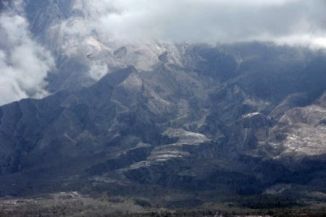 JNN 18 Nov 2010 : The death toll from Indonesia’s Mount Merapi volcano eruption has risen to 273 as rescue workers recover more bodies from the vicinity in central Java.
Hundreds of people have been displaced after Mount Merapi started its volcanic activities late October.
According to the country’s officials, some 400,000 people are still living in temporary shelters.
Witnesses have reported that Merapi continues to shoot ashy, white smoke, causing hot ash rains in a region close to the volcano. Scientists said it could not be determined how long the volcano will continue its activity.
Merapi’s eruption killed around 1,300 people in 1930 but experts have declared the current eruptions as the biggest since 1872.
The rising death toll comes as Indonesia is still dealing with the aftermath of a tsunami, which claimed hundreds of lives in 2003.
Much of Indonesia lies in the Pacific ring of fire, a seismically active area known for frequent quakes and volcanic eruptions.
China blasts US $600bn banking plan
 JNN 08.11.10 China has blasted a US decision to inject hundreds of billions of dollars into the US banking system amid growing tensions between Washington and Beijing.
Chinese Vice Finance Minister Zhu Guangyao said Washington is ignoring its responsibility to support emerging economies.
Zhu said the move would bring greater volatility to markets worldwide and lead to excessive flows of capital into emerging markets.
“The US has not fully taken into consideration the shock of excessive capital flows to the financial stability of emerging markets,” Zhu told reporters in Beijing on Monday.
Last week, the US Federal Reserve announced plans to pump $600 billion into its economy by the end of June 2011.
Experts say the move is an attempt to boost America’s sluggish economy.
The move is expected to force down interest rates for homeowners and businesses.
Supporters of the plan say weakening the US dollar could also help make American goods more competitive overseas.
Nations from Brazil to Germany have criticized the US policy, saying it will push their currencies higher and make their exports less competitive.
Relations between Beijing and Washington have been deteriorating over a number of issues, including currency debates and the Pentagon’s arms sales to Taiwan.Thousands Protests in Indonesia against Obama's visit
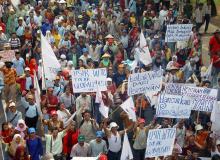 JNN 07.11.10 Jakarta Thousands of Indonesians gathered outside the US embassy in Jakarta to protest against the visit of US President Barack Obama
Thousands of Indonesians gathered outside the US embassy in Jakarta to protest against an upcoming visit of US President Barack Obama.
The protesters marched on the US embassy in Jakarta and called for the full withdrawal of US troops from Pakistan and Afghanistan.
They also asked Washington to stop its “blind support for Israel.”
“We’re going to change our assessment of Obama only when Obama withdraws all the American troops from Iraq and Afghanistan and stops the attacks in the border region of Pakistan and Afghanistan and stops the blind support for Israel,” a prominent participant said.
“We don’t see the differences between Obama and Bush, they both oppress Muslims, they both have blood on their hands,” Ismail Yusanto, a spokesman for a Muslim group in Indonesia said.
“That’s why we reject Obama and we don’t believe that he’s reaching out to Muslims.”
The spokesman said about 20,000 people attended the rallies.
Obama will make a stop in Indonesia on Tuesday as part of his 10-day Asia tour.
The US president is in New Delhi now, where he was greeted by nationwide protests.
In reaction to the visit, victims of a toxic tragedy in the city of Bhopal held a sit-in, demanding compensation for the fatal incident.
More than 500,000 people were exposed to toxic gas after 40 tons of deadly chemical leaked at the Indian subsidiary of the US Corporation Union Carbide on December 3, 1984.
The protesters are also demanding President Obama take action against the Union Carbide and Dow Chemicals for breaching the law for many years.
People also gathered in the eastern state of Orissa, protesting against President Obama’s presence in the country, arguing that he has been unable to maintain peace in developing countries.
Meanwhile, the Kashmir Action Committee staged a demonstration in Pakistan’s Lahore, calling on the US president to take a strong stance against the Indian government’s crackdown on the Kashmiris.
More than 100 people have been killed in Indian-administered Kashmir since June, when the residents began holding anti-India demonstrations.
President Obama’s decision to spend three days in India, while bypassing Pakistan, has also come under fierce criticism.
A Washington Post report said that the move has sparked anxiety among government officials in Islamabad due to fears that the US president’s visit could likely upset the delicate balance of power between the two nuclear-armed neighbors.
Thousands Protests in Indonesia against Obama’s visit
JNN 07.11.10 Jakarta Thousands of Indonesians gathered outside the US embassy in Jakarta to protest against the visit of US President Barack Obama
Thousands of Indonesians gathered outside the US embassy in Jakarta to protest against an upcoming visit of US President Barack Obama.
The protesters marched on the US embassy in Jakarta and called for the full withdrawal of US troops from Pakistan and Afghanistan.
They also asked Washington to stop its “blind support for Israel.”
“We’re going to change our assessment of Obama only when Obama withdraws all the American troops from Iraq and Afghanistan and stops the attacks in the border region of Pakistan and Afghanistan and stops the blind support for Israel,” a prominent participant said.
“We don’t see the differences between Obama and Bush, they both oppress Muslims, they both have blood on their hands,” Ismail Yusanto, a spokesman for a Muslim group in Indonesia said.
“That’s why we reject Obama and we don’t believe that he’s reaching out to Muslims.”
The spokesman said about 20,000 people attended the rallies.
Obama will make a stop in Indonesia on Tuesday as part of his 10-day Asia tour.
The US president is in New Delhi now, where he was greeted by nationwide protests.
In reaction to the visit, victims of a toxic tragedy in the city of Bhopal held a sit-in, demanding compensation for the fatal incident.
More than 500,000 people were exposed to toxic gas after 40 tons of deadly chemical leaked at the Indian subsidiary of the US Corporation Union Carbide on December 3, 1984.
The protesters are also demanding President Obama take action against the Union Carbide and Dow Chemicals for breaching the law for many years.
People also gathered in the eastern state of Orissa, protesting against President Obama’s presence in the country, arguing that he has been unable to maintain peace in developing countries.
Meanwhile, the Kashmir Action Committee staged a demonstration in Pakistan’s Lahore, calling on the US president to take a strong stance against the Indian government’s crackdown on the Kashmiris.
More than 100 people have been killed in Indian-administered Kashmir since June, when the residents began holding anti-India demonstrations.
President Obama’s decision to spend three days in India, while bypassing Pakistan, has also come under fierce criticism.
A Washington Post report said that the move has sparked anxiety among government officials in Islamabad due to fears that the US president’s visit could likely upset the delicate balance of power between the two nuclear-armed neighbors.
Indians greet Obama with mass protests
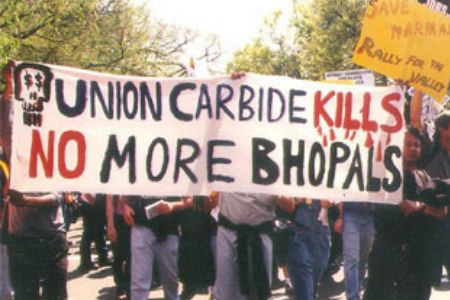 JNN 07.1.10 Peace activists in different states of India have staged massive protests against US President Barack Obama’s visit to the country.
The protests come as the US president has embarked on a three-day visit to boost business with India.
In reaction to the visit, victims of a toxic tragedy in the city of Bhopal held a sit-in, demanding compensation for the fatal incident.
More than 500,000 people were exposed to toxic gas after 40 tons of deadly chemical leaked at the Indian subsidiary of the US Corporation Union Carbide on December 3, 1984.
Around 5,000 people died in the immediate aftermath, and some 15,000 more died in the weeks that followed.
Many have suffered life-long chronic illness as a result and many children have been born with birth defects 25 years after the world’s worst industrial disaster.
The protesters are also demanding President Obama take action against the Union Carbide and Dow Chemicals for breaching the law for many years.
People also gathered in the eastern state of Orissa, protesting against President Obama’s presence in the country, arguing that he has been unable to maintain peace in developing countries.
Meanwhile, the Kashmir Action Committee staged a demonstration in Pakistan’s Lahore, calling on the US president to take a strong stance against the Indian government’s crackdown on the Kashmiris.
More than 100 people have been killed in Indian-administered Kashmir since June, when the residents began holding anti-India demonstrations.
President Obama’s decision to spend three days in India, while bypassing Pakistan, has also come under fierce criticism.
A Washington Post report said that the move has sparked anxiety among government officials in Islamabad due to fears that the US president’s visit could likely upset the delicate balance of power between the two nuclear-armed neighbors.
Lucknow Shia Muslim clerics oppose Obama’s Indian visit
 JNN 03.11.10 Lucknow: Muslim clerics in Lucknow on Tuesday opposed the upcoming visit of US President Barack Obama. Terming US as a supporter of Israel, the clerics claimed that the country was engaged in killing of innocent civilians world-wide. The clerics claimed that a joint appeal will be issued formally on Wednesday denouncing Obama’s visit.
Firing a fresh salvo, eminent Shia cleric and Imam-e-Juma, Maulana Kalbe Jawwad stated that US is behind terror activities around the globe. “At the pretext of curbing terrorism, the country is killing innocent persons in Afghanistan and Iraq. The next on their agenda is Iran which is being threatened,” claimed Jawwad. He also stated that US and its ally Israel are perpetrators of terrorism. “The Indian government should come out clean and snap all ties with Israel. It should also issue an statement decrying the activities of Israel,” said Jawwad.
Another cleric Imam, Tile Wali Masjid, Maulana Fazlur Rehman Waizi demanded that the US and allied forces should be withdrawn from Afghanistan and Iraq. “Their occupation of these countries is illegal as they are torturing the innocent citizens in the name of establishing peace,” said Waizi.
The cleric urged the Indian government to revert to its Nehruvian Non Alignment Movement (NAM) policy and should not be part of any power axis. “The government is playing in the hands of America. It should rather ensure that any talks are held on equal footing. They should stick to the old NAM policy for peaceful existence,” said Maulana Jahangir Qasmi, another Muslim cleric.
The clerics, however, denied that they have given call for burning the effigy of Obama. “We have issued only an appeal opposing the US President Obama’s visit as we have not seen much change in its policy from the past. The tone may have mellowed down a bit but still it is pursuing its own agenda of establishing its base in different parts of the world,” said Jawwad. He, however, claimed that conscious denizens are free to react and express their anger which may include burning Obama’s effigy.
The clerics have been opposed to US in the past also when during Ramzan an iftar hosted by US embassy in Lucknow witnessed violent protests. Most of the clerics had boycotted the iftar which was hosted by US embassy official Uzra Syed in Clarks Awadh hotel. The issue of visa denial by US to Vice-President, All India Muslim Personal Law Board (AIMPLB) Maulana Kalbe Sadiq is still fresh in the minds of the clerics.
iran condemns Jewish settlers' assault on Jerusalem church in Holy Quds
Iranian Foreign Ministry condemned burning an old church in Holy Quds by Zionists.

Iranian Foreign Ministry condemned burning an old church in Holy Quds by Zionists.
“The Islamic Republic of Iran regards the recent provocative measure of Zionists in desecrating an old church in occupied Quds as another evidence of Zionist regime’s insult to divine religions and religious,” said Iranian Foreign Ministry Spokesman Ramin Mehmanparast.
“Zionist regime has already shown that it does not respect divine sources and its followers with desecrating religious sites of Muslims, Christians and al-Aqsa Holy Mosque.”
He called for the international community to denounce the Zionist measure and take steps to stop such insulting actions.
A group of extremist Jewish settlers set fire to a one hundred year old Christian church in holy Quds on Friday causing substantial damage to its first floor.
Face to Face with Tony Blair's sister-in-law "Lauren Booth"
British ex-premier Tony Blair’s sister-in-law has inspired mixed reaction in the West after converting to Islam following a visit to the Iranian holy city of Qom.

British ex-premier Tony Blair’s sister-in-law has inspired mixed reaction in the West after converting to Islam following a visit to the Iranian holy city of Qom.
Lauren Booth, a broadcaster with Iran’s English-language Press TV news network, has talked about her “journey” to Islam on a Press TV program which will be aired next Sunday.
The journalist and human rights activist was recently in the Iranian capital, Tehran, to cover the Quds Day solidarity march held annually on the last Friday of Muslims’ holy month of Ramadan.
She explains in details how she later traveled to a place which led her to one of the most important decisions in her life.
She said she “did not know that she was on such a journey” until she reached “a mosque” in the holy Iranian city of Qom, 156 kilometers southwest of Tehran. It was there that she “felt it” as she kept vigil all through the night.
As for what started it all, she reminisced about her encounters with Muslims, especially Palestinians in Gaza and Ramallah whose rights she has actively defended during much of her adult life.
The 43-year-old half-sister of Cherie Blair now wears hijab outside her home and prays five times a day.
Booth, who had moved to France with her husband and two daughters in 2004, returned to Britain after her husband suffered a sever brain injury following a motorcycle accident in April 2009.
In an hour-long appearance on Press TV’s Face to Face program, Lauren revealed all about her conversion to the world’s fastest growing religion and shared with the world all the feedback she has received from Muslims, non-Muslims as well as her own beloved family and friends.
Iraqi Main Shia Bloc Rejects Saudi Offer
National Alliance turns down Saudi monarch’s offer to host all-party talks to break Iraq’s political impasse.

he National Alliance, Iraq’s main Shia bloc, has turned down a Saudi offer to host all-party talks to resolve months of deadlock over forming a new Iraqi government.
The offer was turned down on Sunday after some politicians voiced fears over foreign interference. Saudi Arabia’s King Abdullah had a day earlier volunteered to host the talks in November.
The National Alliance, a coalition of Shia blocs, including that of incumbent prime minister,
Nouri al-Maliki’s coalition, said that a deal in Baghdad was close after the highest court ordered parliament to resume sessions last week.
“Though we express our appreciation to Saudi Arabia for its concern about the situation in Iraq and its willingness to provide support, we would like to confirm Iraqi leaders are continuing their meetings to reach a national consensus,” a statement issued by the alliance, said.
According to a senior member of al-Maliki’s bloc, the Kurdish Alliance also supports this statement.
The Kurdish alliance has 57 seats in parliament and al-Maliki’s camp is working closely with them to form a coalition government.
The Kurdish bloc was not immediately available for comment.
A spokeswoman for the rival Iraqiya list, led by Iyad Allawi, the former prime minister, however, welcomed the Saudi monarch’s initiative.
“We ask all political blocs to welcome the initiative, preventing Iraq’s security situation from deteriorating” amid continued political deadlock, Maysoon al-Damluji, a prominent member of the bloc, said.
A Shia cleric and two mosques' administrators were detained by the Saudi authorities
Saudi police arrested since Tuesday a cleric and two other people from Qatif city on allegations of establishing a memorial ceremony on the anniversary of the death of the founder of the Islamic Republic of Iran Al-imam Al-Khomeini.

According to reliable sources, Saudi authorities detained Sheikh Saeed al Bahhar, the imam of Imam Reza Mosque in Tarot Island, and the administrator of the mosque Mr. Mohammad Hassan al Hubail.
In a similar event, Saudi police also arrested the administrator of Imam Al-Hadi Mosque in the village of Sanabis, Mr. Hussien al Dubaisy.
Family sources said that the three arrests were under the pretext of establishing a memorial day to commemorate the death of the founder of the Islamic Republic of Iran Al-Imam Al-Khomeini.
According to some sources attributed to Sheikh Saeed Albahhar and some people known to be close to him, indicated that he had never organized or participated in any memorial service of that kind recently.
Sheikh al Bahhar was called in on Monday by the Saudi police at Tarot Island police station and was subjected to a lengthy investigation before being released on the same day.
However, on the following day after the first call, he was called in again accompanied by Mr. Hussien al Dubaisy and Mr. Mohammad Hassan al Hubail , where they were all taken to custody at Al-Qatif Police Station. Since then, they still remain in the detention center.
According to family sources, arrest warrants were issued by the office of the Prince Mohammed bin Fahd, the governor of the eastern province of Saudi Arabia.
In addition, many observers noticed the ambiguity and contradiction that surrounds the circumstances and justification for the arrests.
It is noteworthy to indicate that Sheikh Albahhar was just grant a passport since few days ago after the travel ban against him that lasted more than fourteen years.
Head of Al-Azhar to Meet Grand Ayatollah Sistani
JNN 30.10.10 The Kuwaiti daily Al-Jarida yesterday said that Sheikh Ahmed Al-Tayeb, president of Egypt’s Al-Azhar University plans to meet with Shia source of emulation grand Ayatollah Sayyed Ali Sistani.

The Kuwaiti daily Al-Jarida yesterday said that Sheikh Ahmed Al-Tayeb, president of Egypt’s Al-Azhar University plans to meet with Shia source of emulation grand Ayatollah Sayyed Ali Sistani.
According to Nun website, Al-Tayeb will visit Iraq after the new Iraqi government is formed.
He will also meet with other Shia sources of emulation to discuss ways for proximity among Shia and Sunni schools of thought.
His trip is expected to be a step towards holding an international conference of Shia and Sunni scholars and thinkers.
Located in Cairo, Egypt, Al-Azhar University is the main centre of Sunni Islamic learning in the world.
'Bahrain's Shia trials not to be fair'
A Bahraini activist says the trial of Shia opposition detainees in Bahrain will not be fair as the Judiciary is totally swayed by the kingdom’s ruling family.

“I do not think there is going to be a fair trial. You cannot have a fair trial when the judge is accused himself,” Saeed al-Shahabi from Bahrain Freedom Movement said in an interview with Press TV on Thursday.
“In Bahrain the judge is appointed by the ruling family and he could be one of them. So, he is charging and trying people who he thinks are enemies,” he further explained.
During the trial of 27 Shia opposition activists at Bahrain’s High Criminal Court on Thursday, defendants complained that they were tortured by Bahraini authorities while in detention.
Defense attorneys argued that defendants had been abused while in detention. They also faced beatings and electric shocks and kept in solitary confinement.
Al-Shahabi ruled out the possibility of a just and lawful hearing while at the same time the defendants have been subject to torture and abuse.
” … You have these serious allegations of torture, and today they have proved to be not just allegations but facts when people expose their bodies to show serious wounds and one of them, Jaafar al-Hasabi, has said explicitly that he was sexually assaulted,” al-Shahabi went on to say.
The trial comes less than one week after the country’s parliamentary elections, which saw thousands demonstrating against what they insist is discrimination by the Sunni-led government.
Shias say they are discriminated against in housing, health, and education, in addition to government sector jobs.
Shias comprise 70 percent of Bahrain’s population, yet hold only 17 of the 40 seats in the directly-elected lower house of parliament.
Additionally, the upper house, or Shura Council, also has 40 members that are entirely appointed by the Bahraini King, Shaikh Hamad bin Isa Al Khalifa, and has vetoing power.
Moreover, the Bahraini king appoints all the country’s ministers.
The government came down hard on the Shia opposition and human rights activists leading up to the elections in August and has arrested more than 250 dissidents that were protesting the election campaigns.
Bahrain’s Shi’ite Opposition Gains in Elections, But Still in Minority and Pressure
Bahrain’s embattled Shi’ite opposition movement won big in the Persian Gulf island state’s parliamentary elections, according to results announced on Sunday.
Bahrain’s embattled Shi’ite opposition movement won big in the Persian Gulf island state’s parliamentary elections, according to results announced on Sunday.
The Shi’ite bloc called Al-Wefaq on Saturday won all 18 seats it had contested, a one-seat gain from 2006 elections, making it again the largest force in Bahrain’s 40-member Council of Representatives. No candidate secured a majority in nine districts, setting the stage for runoffs Saturday. Turnout was 67 percent, with more than 300,000 ballots cast.
“We were having difficulties yesterday because lots of names were dropped [from the voter rolls],” said Khalil Al-Marzooq, a returning Al-Wefaq member of parliament, in an interview Sunday. “However, because of the massive participation, we managed to win.”
The vote in the Sunni-led kingdom — a strategic base for the U.S. Navy’s Fifth Fleet — comes amid heightened tensions between the government and the Shi’ite majority.
On Thursday, 23 Shi’ite opposition members will go on trial for charges of plotting a coup. The men were arrested two months ago following weeks of escalating Shi’ite street riots. Human rights groups allege that hundreds more have been detained, deprived of due process, and in many cases tortured — claims the government vehemently denies. Authorities also shut down dozens of opposition websites, including Al-Wefaq’s.
Mr. Al-Marzooq said the crackdown was regrettable and that in addition to pursuing its priority of housing for low-income Shi’ites, Al-Wefaq would seek democratic reforms.
“We want more authority for the Council of Representatives — this is the main thing — and we are looking in the future to have a peaceful transition of power so that the prime minister is elected directly or indirectly from the people of Bahrain,” he said.
The prime minister and members of the Shura Council, the upper legislative body, are currently appointed by King Hamad ibn Isa Al Khalifa.
The election was the third since the king began his political-reform project nearly a decade ago, paving the way for Bahrain’s first elected parliament since the 1970s. While the reforms resulted in greater enfranchisement of the country’s Shi’ites — and of women, who were granted suffrage — it has led to an intra-Shia debate over whether the system is rigged to the point that participation is futile, with four opposition groups having called for an election boycott.
One common complaint of critics involves gerrymandering, which effectively ensures the majority Shi’ites — 60 percent to 70 percent of the population, estimates say — cannot win a parliamentary majority.
Hadi Al-Mosawi, a newly elected Al-Wefaq member of parliament (MP), stated that his bloc had conceded 22 districts, contesting “the only 18 which allow us to be competitive — the Shi’ite areas.” He said there were wide differences in the number of people across districts — differences that tended to favor Sunnis. “One MP can represent 16,000, and another can represent only 1,000,” he said, calling the discrepancy a violation of the “one-man, one-vote” principle.
Mr. Al-Marzooq said that despite the difficulties, Bahraini Shi’ites stood more to gain by working within the system, appearing to regret Al-Wefaq’s boycott of the 2002 elections.
“At least if you have a goalkeeper — even if he is standing against a very good opponent — at least he will defend the goal from lots of balls coming in,” he said.
“This is the situation in Bahrain. If you aren’t in the parliament, then there will be lots of [bad] laws — like what happened in 2002 without the presence of the opposition. The terrorism law, the political-societies law, the gathering law — all of the bad laws — have come from the [2002-2006] parliament, where the opposition was not there.”
“The massive participation,” Mr. Al-Marzooq said, “shows that the boycott debate is over.”
Six people killed in Iraq violence
At least six people, including three security forces, have been killed in the new wave of bomb attacks in Iraq, interior ministry sources say.
In the first incident, three policemen lost their lives on Wednesday when a roadside bomb exploded in the Hamreen region of Baquba province, AFP reported.
An interior ministry source says another bomb went off near the Sunni Endowment’s headquarters in Baghdad and killed two guards and left four other people injured.
The source added that a magnetic “sticky bomb” targeted a car and claimed a live, wounding four other people.
The attacks came a day after seven people have been killed by bomb blasts in the Iraqi capital and the country’s eastern province of Diyala.
Seven years after US raid on Iraq, casualties from bomb attacks still remain part of daily life in the war-torn country.
The classified documents released by the whistleblower website Wikileaks have shed light on a spate of crimes and offences committed in Iraq over the past few years, including assassinations and murders.
The US invaded Iraq in 2003 under the pretext of having weapons of mass destruction, but such weapons were never found.
Saudi student punished for being Shia
Shia students at an elementary school in Saudi Arabia have been subject to physical punishment and insults over their faith by a Salafi teacher.

The report, which was first published by the Saudi Arabian Rasid News Network, said the punishments traumatized the students and inflicted emotional and psychological damage.
The teacher identified as Shaher al-Aatibi, is a hard-line member of the Salafi sect working at the Jafar ibn Abi Talib elementary school in Qatif in eastern Saudi Arabia.
Al-Aatibi repeatedly calls Shia students ‘infidels’ and ‘idolaters,’ saying they support Iran and the late founder of the Islamic Revolution, Ayatollah Rouhollah Khomeini.
According to the report, the teacher also physically punishes students over unwarranted issue such as wearing rings, causing a rift among the different tribes of the area.
A 2009 report by the New York-based Human Rights Watch (HRW) criticized the Saudi government over its “systemic state discrimination” against Shia Muslims across the Kingdom.
Jafar ibn Abi Talib elementary school has a total of 600 staff and students, a vast majority of whom are Shia.
Qatif has the largest concentration of Shia Muslims in Saudi Arabia.
German companies offer housing units in holy Karbala
German companies offered to implement 1,000 low-cost housing units within an integrated housing neighborhood project for a total cost of $16.5 million, a local spokesman said on Saturday.

German companies offered to implement 1,000 low-cost housing units within an integrated housing neighborhood project for a total cost of $16.5 million, a local spokesman said on Saturday.
“A delegation representing a German consortium offered to Karbala Governor Amal al-Din al-Hirr and Provincial Council Chief Muhammad Hameed al-Moussawi a project of 1,000 low-cost housing units, each consisting of three rooms,” Emad Muhammad
Hussein, the Karbala Province’s information director, told Aswat al-Iraq news agency.
For his part, the chairman of the board of the German consortium said the delegation was acquainted on conditions in the city and was encouraged to offer readiness to implement the project, which would take place near the green belt southwest of Karbala city.
“The contract will be signed during the next few days to start the project by German technicians while the working hands will be Iraqi,” he added.
The holy Shiite city of Karbala lies 180 km south of the Iraqi capital Baghdad.
Translation of “Embryology and Quran” Published in Tajikistan
Written by Hojat-ol-Islam Abdul-Karim Biazar Shirazi, the book “Quran, Embryology and Conversion of Some Embryologists to Islam” was translated into Tajik language and published in Tajikistan.

Written by Hojat-ol-Islam Abdul-Karim Biazar Shirazi, the book “Quran, Embryology and Conversion of Some Embryologists to Islam” was translated into Tajik language and published in Tajikistan.
The book has been translated by Seifollah Monajanov and published in Tajik Cyrillic alphabet by Iran Cultural Center in Tajikistan.
The introduction of the book, which has been published in 1000 copies, is in both Persian and Cyrillic scripts.
Hojat-ol-Islam Shirazi has got a PhD in Quran and Hadith Sciences, an MA in Islamic History and Civilization from McGill University in Canada, as well as an Ijtihad certificate from the Ministry of Science and Higher Education.
His other published works include the 8-volume collection of “Kashef Exegesis” in Persian and Arabic, “Islamic Sects’ Solidarity”, and “Islam; Religion of Solidarity”.
Suicide, depression cost Japan $32bn
 JNN 18.10.10 Japan has announced that increased depression and suicide among its citizens cost the Japanese government $32 billion last year.
Unemployment and financial hardship pertaining to health care expenses were cited as the main reasons behind the spike in suicide, according to a report by Deutsche Welle.
And 2009 was the twelfth year in a row that more than 32,000 people committed suicide.
Japanese Prime Minister Naoto Kan says the high number of bankruptcies is one of the major causes of the high suicide rate.
In response to the crisis, the Japanese government formed an emergency task force on September 3 to educate and inform the public about the realities of suicide.
Analysts believe that the Japanese perception on depression is the main cause of the high number of suicides in the East Asian nation.
Russian president arrives in China
 JNN 26.09.10 Russian President Dmitry Medvedev has arrived in northeast China to discuss plans to boost oil and gas exports to his country’s Asian neighbor.
op Russian energy officials accompany the Russian premier on his three-day visit to China, which started on Sunday.
Medvedev began his stay by visiting Dalian, a former Russian city, to pay respect to Russian soldiers who died defending the port from Japanese invaders.
The Russian president emphasized the warm ties between the two countries, Russia and China, which he says will “do good” for future generations.
“Friendship with China is Russia’s strategic choice, it’s a choice that was sealed by blood years ago,” Medvedev told Russian and Chinese war veterans in Dalian, according to AFP.
He is slated to meet his Chinese counterpart Hu Jintao in the capital Beijing on Monday. The launch of a major oil pipeline is expected to be at the heart of the talks.
The pipeline, scheduled to be completed next year, is designed to deliver over one million barrels of Russia’s oil a day to China.
On Tuesday, Medvedev will head to Shanghai and visit the Russian pavilion at the World Expo.
Assad: No One Should Dare Touch Resistance and Its Arms
Lebanese daily Al-Akhbar quoted on Thursday Syrian President Bachar Assad as warning that Hezbollah’s rifle was directed at Israel.
According to the Lebanese daily, Assad recently told his guests that no one should dare touch the resistance and its arms.
The newspaper also quoted Assad as calling for restraint in Lebanon and unification of weapons to confront the Israeli enemy.
Damascus visitors told al-Akhbar that the Syrian president has expressed concern over the situation in Lebanon, saying that tight coordination between Syria and Saudi Arabia could keep calm in the country.
According to Assad, all Lebanese sides should benefit from this atmosphere to consolidate the interior.
Imam Khamenei attends Imam Ali's mourning ceremony
JNN New Agency,On Imam Ali’s (P.B.U.H.) martyrdom anniversary, different groups of people and the Islamic Revolution Leader Imam Seyyed Ali Khamenei attended a mourning ceremony in Imam Khomeini Hosseiniyeh in Tehran.
The ceremony was held after Wednesday’s noon prayer lead by Imam Khamenei in which the participants mourned Imam Ali’s martyrdom.
Mourning ceremonies were held on the 19th, 20th and 21st of the month of Ramadan in Imam Khomeini Hosseiniyeh…
 JNN News
You must be logged in to post a comment.